Many organisations collect more data than ever before, yet only a small percentage manage to use it effectively. Reports, dashboards, and raw numbers often exist in different systems, making it difficult for leaders to understand the real reason behind falling revenue, rising costs, or inconsistent customer behaviour. This is where strategic analytics consulting plays an important role. It bridges the gap between daily business challenges and practical AI solutions that deliver measurable value.
Turning complex problems into usable insights is not about quick fixes. It requires a structured approach, clear thinking, and a deep understanding of how data connects with business operations. With the right process, companies can take a specific challenge and develop an AI-driven solution that improves decision-making and long-term performance.
This article explains how strategic analytics consulting transforms problems into solutions, step by step.
Understanding the Business Problem Clearly
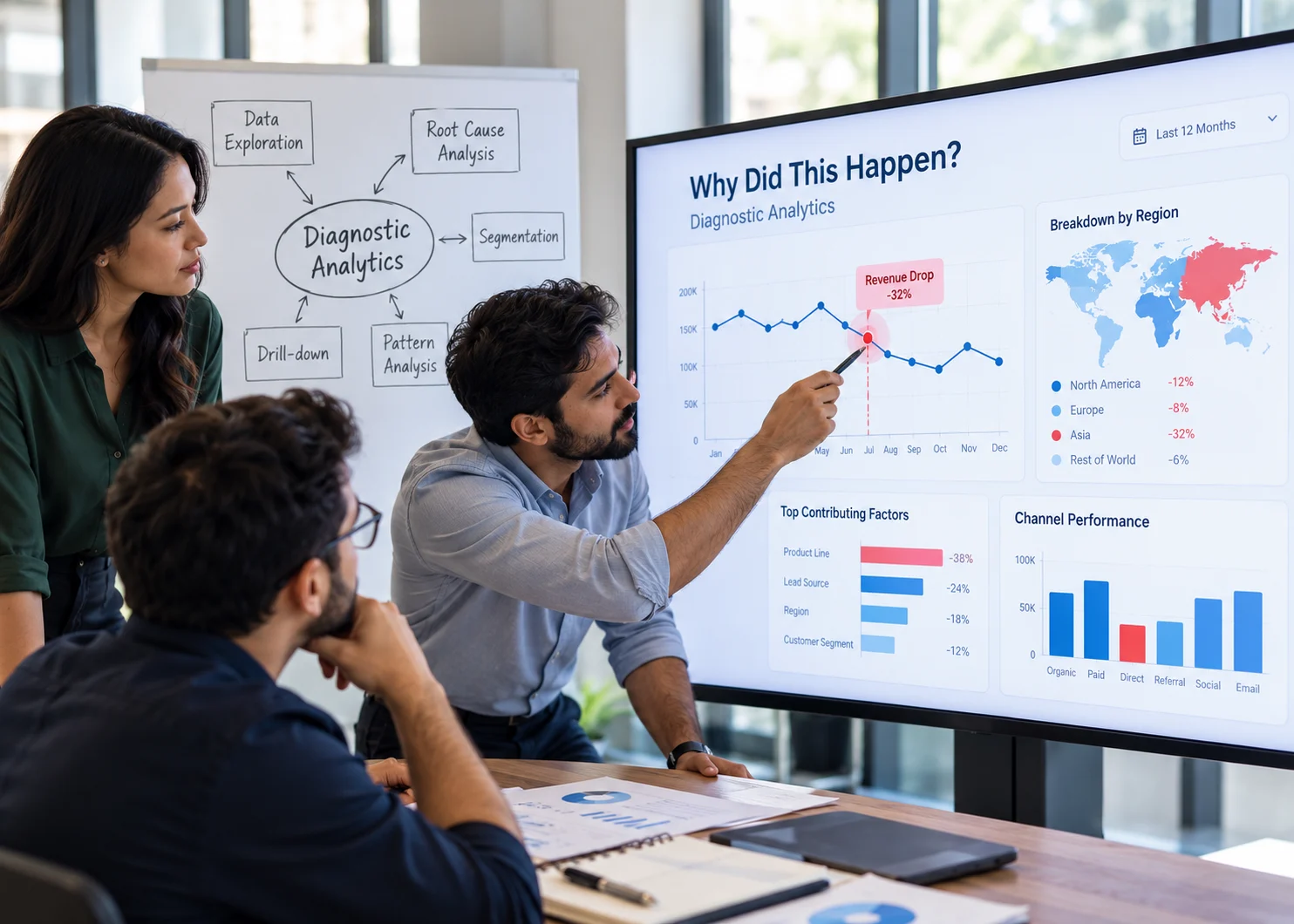
Every strong analytics or AI solution starts with a complete understanding of the problem. Many companies attempt to solve issues with tools or technology before confirming what the real challenge is. For example, a drop in sales may not be caused by pricing; it might be due to longer response times, poor customer segmentation, or inaccurate demand forecasting. Without clarity, even the most advanced system will fail.
Consultants begin by examining the situation from multiple angles. This includes reviewing internal processes, customer feedback, historical data, and performance metrics. They speak with teams to understand daily hurdles, decision-making delays, or gaps in workflows. This stage helps uncover whether the problem is related to customer behaviour, supply chain bottlenecks, cost structure, resource utilisation, or operational inefficiency.
When the core issue becomes clear, it becomes much easier to decide whether an AI-based approach will help. Clear problem definition sets the foundation for a strong analytics strategy.
Role of Strategic Analytics Consulting in Problem Solving
Strategic analytics consulting is more than analysing data. It creates a structured path that connects business goals with data-driven opportunities. Consultants help translate broad questions such as “How do we reduce churn?” or “How can we protect margins?” into measurable objectives supported by relevant data.
The consulting process normally includes:
- assessing the quality and availability of existing data
- identifying insights that are missing or incomplete
- defining the right performance indicators
- developing an analytics roadmap with clear priorities
- selecting the methods needed to measure progress
This approach ensures that analytics initiatives are rooted in the organisation’s strategy rather than isolated experiments. The focus remains on long-term value, stable operations, and results that matter to the business not on temporary solutions or unnecessary tools.
Turning Business Problems Into AI Use Cases
Once the business problem is clearly understood, consultants identify opportunities where AI can make a meaningful difference. Not every challenge requires a complex AI model, but many can benefit from prediction, automation, or pattern recognition.
Some common use cases include:
- Forecasting demand to improve inventory planning
- Predicting customer churn based on behaviour patterns
- Identifying fraud or suspicious activity in financial transactions
- Improving resource allocation in operations and staffing
- Optimising marketing spend with more accurate targeting
- Enhancing customer support with intelligent response systems
The purpose is not to force AI into the business but to use it where it improves speed, accuracy, and decision quality. By focusing on practical use cases, companies avoid costly and unnecessary experimentation.
Designing AI Solutions Based on Strategic Analytics
After defining the right use case, the next step is designing the AI solution. This involves translating the business challenge into a technical plan that teams can build and deploy.
A strong solution design includes:
1. Data Requirements
Identifying which data sources are required sales records, customer interaction logs, financial history, product data, or external market indicators.
2. Modelling Approach
Choosing the type of model or method that suits the problem, such as classification, forecasting, clustering, or anomaly detection.
3. Workflow and Integration
Mapping how the solution fits into existing processes. AI must complement how teams already work, not disrupt them.
4. Success Measures
Setting clear criteria for accuracy, reliability, speed, or efficiency. This ensures the solution can be evaluated objectively.
5. Risk Management
Testing assumptions through small pilots or controlled environments reduces implementation risks.
Good design keeps the solution practical, scalable, and aligned with business operations. The objective is to deliver value, not complexity.
Building and Implementing the AI Solution
Once the design is complete, teams begin building the AI solution. This phase involves technical development, but it also relies heavily on communication with business users.
Key steps include:
Data Preparation
Cleaning, organising, and structuring data to ensure accuracy. High-quality data is essential for reliable results.
Model Creation
Developing, training, and tuning the model based on real-world patterns and historical behaviour.
Evaluation
Testing the model thoroughly to ensure it performs consistently across different scenarios.
Deployment
Releasing the solution in the environment where it will operate through a dashboard, cloud platform, API, or internal system.
User Training and Change Management
Teams must understand how to use the insights, interpret predictions, and take action. Proper training increases adoption and reduces confusion.
Governance and Documentation
A documented process ensures transparency, knowledge transfer, and future maintenance.
Implementation is not just technical work it requires alignment, communication, and readiness across departments. When everyone understands the purpose and the expected outcomes, the organisation benefits more effectively.
Measuring Results and Improving Continuously
After deployment, measuring performance is essential. Companies need to see whether the AI solution is meeting the intended goals and improving business outcomes.
Typical metrics include:
- accuracy of predictions
- reduction in operational time
- improvement in customer retention
- cost savings or revenue uplift
- reduced error rates
- faster decision-making
Consultants review these measurements regularly and identify areas for improvement. AI systems should evolve as new data arrives and business conditions change. This continuous refinement helps maintain relevance and accuracy. A solution that performed well last year may need adjustments today, especially if customer behaviour or market trends shift.
Common Challenges and How Analytics Consulting Helps
Many organisations face obstacles when adopting analytics and AI. The most common challenges include:
- missing or inconsistent data
- disconnected systems
- internal resistance to new tools
- uncertainty about which problems to prioritise
- lack of skilled resources
Strategic analytics consulting helps overcome these issues by creating a structured environment. It aligns stakeholders, improves data practices, and builds confidence across teams. Consultants guide organisations through the entire lifecycle problem discovery, analytics planning, AI development, deployment, and optimisation. This reduces the risk of delays or failed projects.
Why This Approach Delivers Stronger Business Results
When companies combine strategic analytics consulting with practical AI solutions, they gain several advantages:
- clarity about the real business problem
- a precise analytics roadmap aligned with goals
- AI use cases that add measurable value
- solutions built on reliable, relevant data
- strong user adoption and long-term success
This approach transforms data into a reliable business asset. Instead of relying on assumptions or guesswork, leaders can make informed decisions backed by solid evidence.
Conclusion
Solving business problems with AI requires more than technical expertise. It demands clear problem definition, structured analytics planning, and thoughtful execution. Strategic analytics consulting ensures that each stage from problem discovery to AI deployment is rooted in business needs. When done well, companies gain better performance, faster decisions, and sustainable growth.
If your organisation is exploring analytics consulting or planning to adopt AI solutions, starting with a detailed problem assessment is the best first step. A structured approach ensures that technology supports your goals and delivers real results.