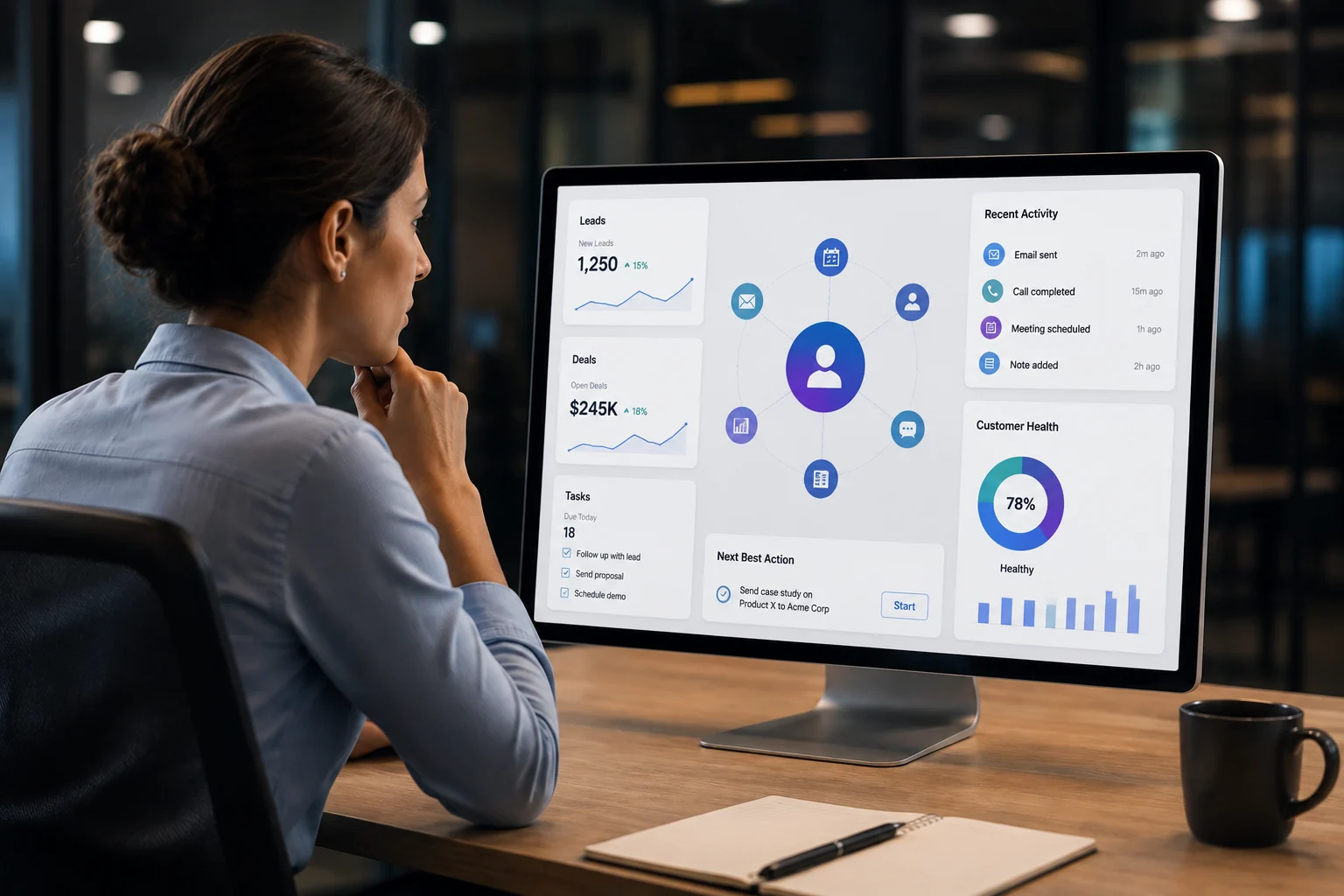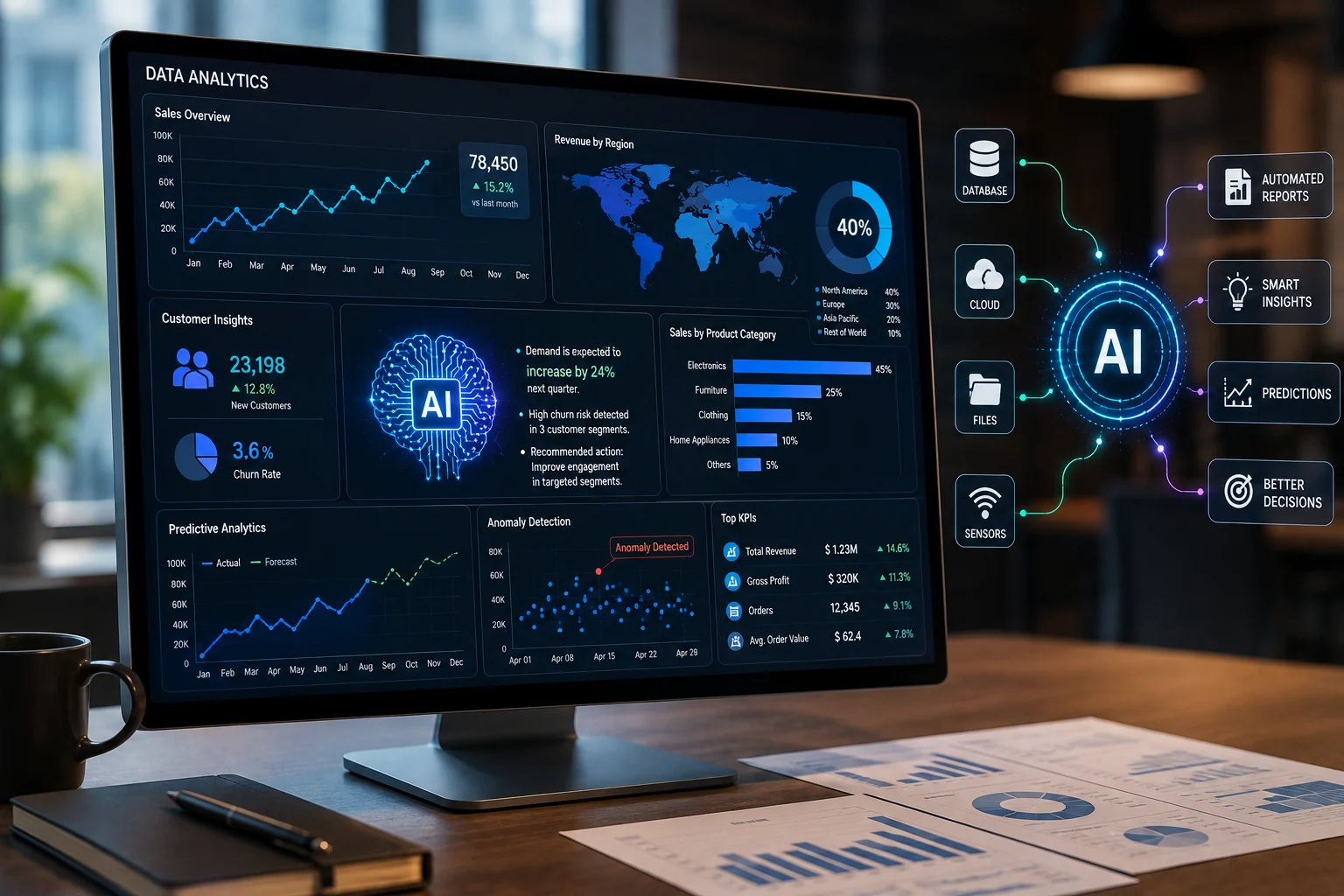
Small businesses are under constant pressure to make quick decisions with limited resources, and AI and Analytics are increasingly being used to support those decisions in practical ways. Industry research from McKinsey shows that companies using data-driven insights are more likely to improve customer acquisition and profitability compared to those relying only on intuition. For small teams, the goal is not complexity, but clarity. When used correctly, intelligent tools and business data help owners understand what is working, what is not, and where to focus next.
What AI and Analytics Mean for Small Businesses
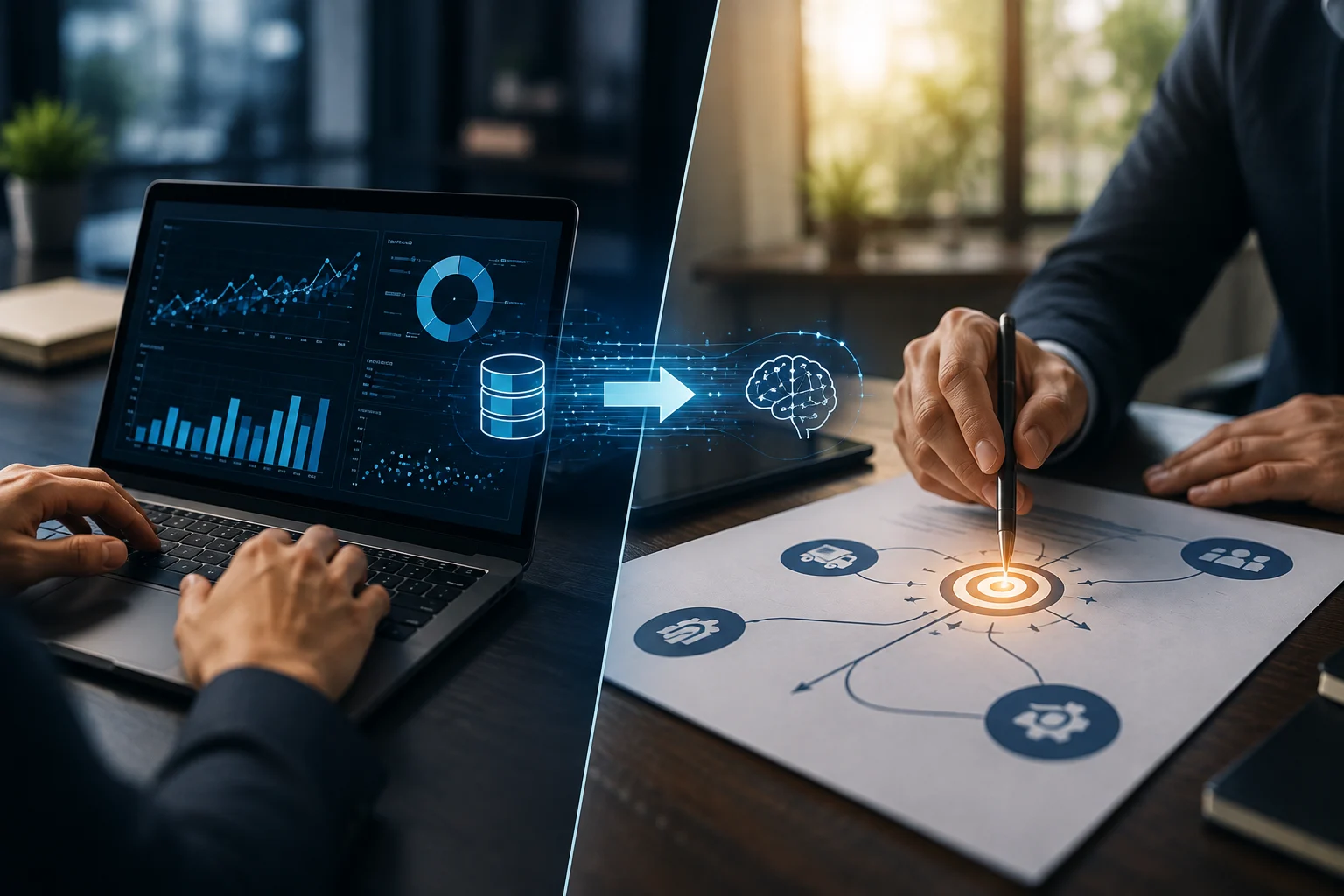
In a small business environment, analytics focuses on collecting and analyzing data from everyday operations such as sales, marketing, customer interactions, and finances. Artificial intelligence builds on that data by identifying patterns, automating repetitive tasks, and offering recommendations that support faster decision-making.
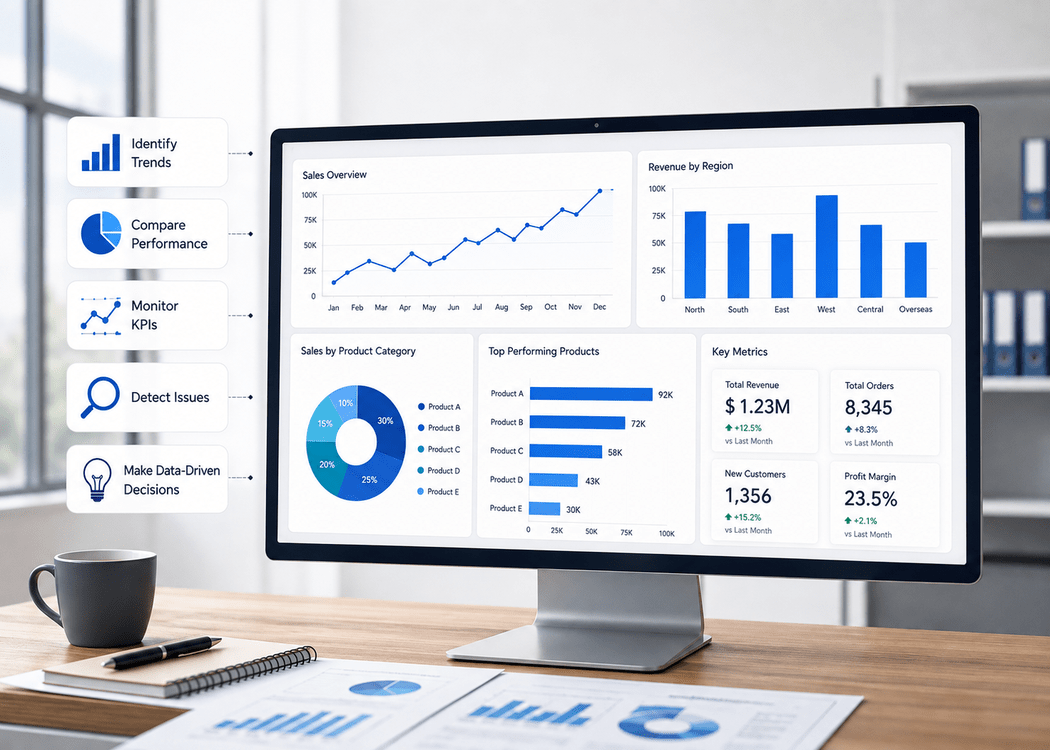
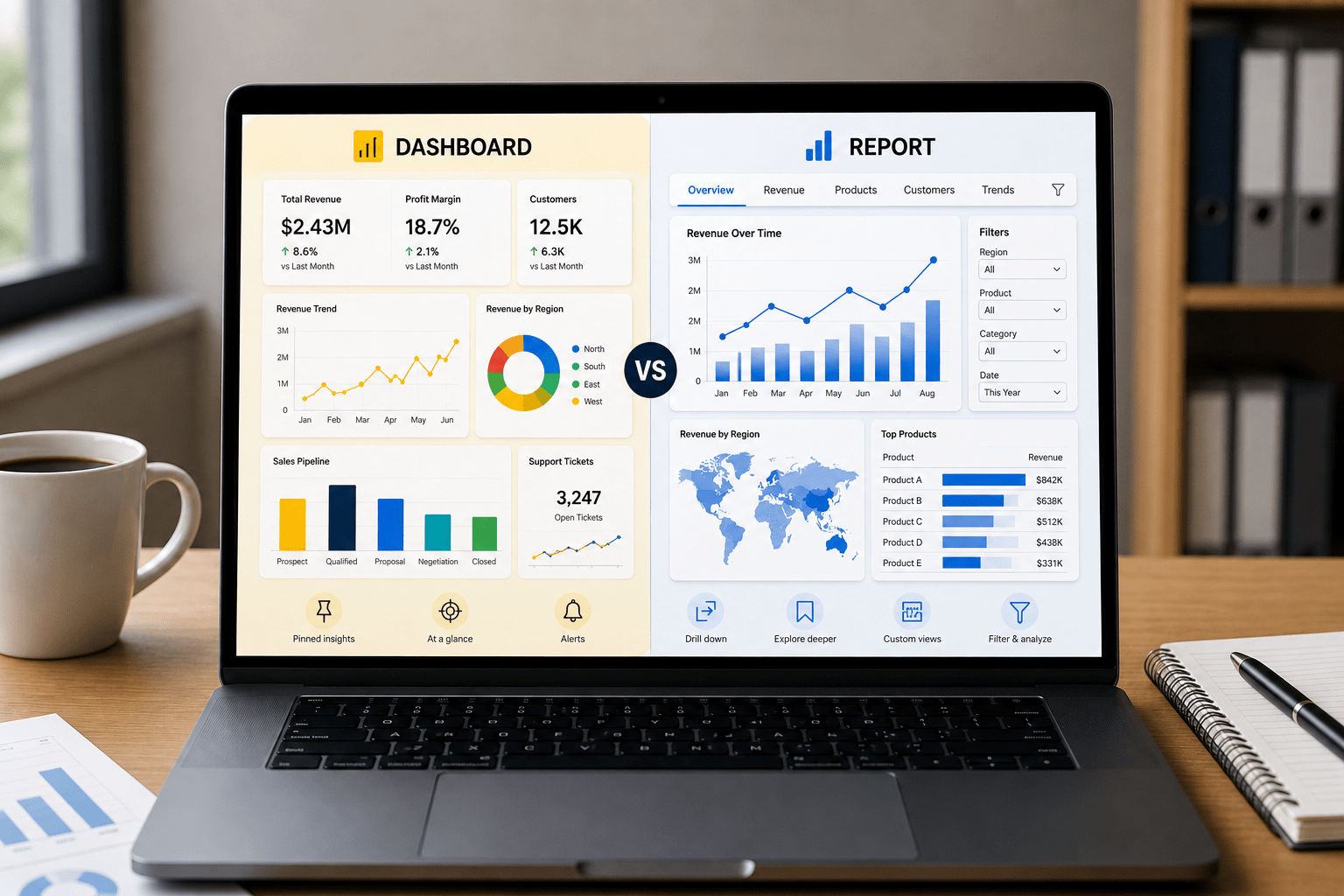
Instead of relying on spreadsheets alone, businesses can use dashboards and reporting tools that turn raw numbers into clear insights. This allows owners and managers to spend less time interpreting data and more time acting on it.
Everyday Examples of AI and Analytics in Small Companies
Many small businesses already use these capabilities without realizing it.
- Sales reports that highlight top performing products
- Email platforms that recommend the best send times
- Customer systems that track repeat purchases and engagement
- Inventory tools that predict demand based on past behavior
These tools quietly improve efficiency and reduce guesswork without disrupting daily operations.
Where Small Businesses See the Biggest Impact From AI and Analytics
The strongest results appear when technology is applied to real business problems rather than abstract goals.
Smarter Decision Making With Data
Analytics replaces assumptions with evidence. Business owners can identify trends, seasonal changes, and performance gaps using clear metrics. Decisions about pricing, staffing, or expansion become more confident because they are supported by data instead of instinct alone.
Stronger Customer Relationships
Customer data reveals buying habits, preferences, and engagement levels. Businesses can identify loyal customers, spot early signs of churn, and tailor offers more effectively. This leads to better retention and stronger long-term relationships.
More Effective Marketing and Sales
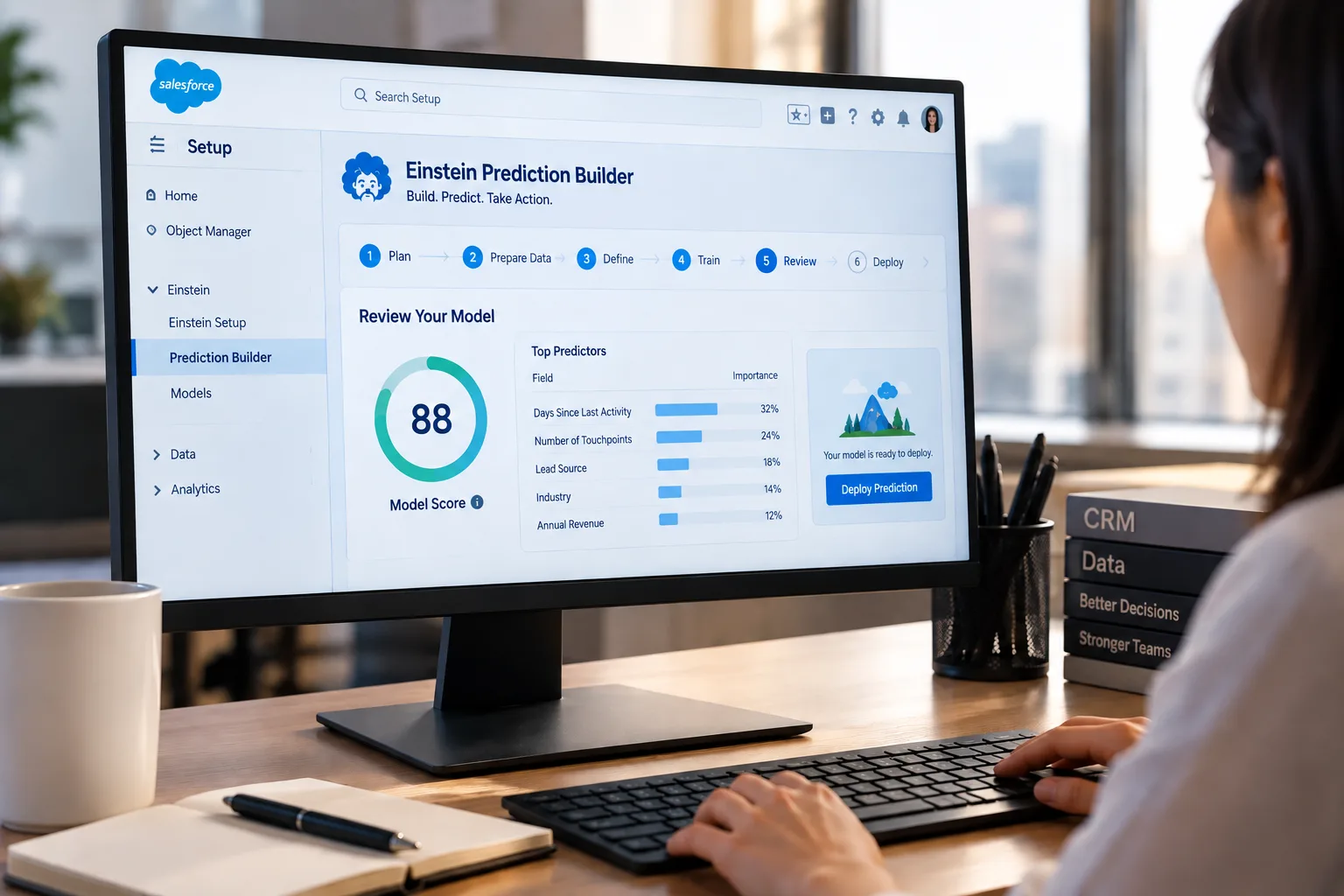
Marketing analytics shows which campaigns deliver results and which ones drain budgets. AI driven tools help score leads, measure conversions, and optimize outreach. This allows small businesses to focus on channels that actually generate revenue.
Improved Operational Efficiency
Operational data often exposes hidden inefficiencies. Analytics highlights bottlenecks, delays, and cost overruns. Automation reduces manual tasks such as reporting, scheduling, and data entry, allowing teams to focus on higher-value work.
Is AI and Analytics Affordable for Small Businesses?
Cost is one of the biggest concerns, but modern solutions are far more accessible than many assume. Cloud-based platforms, subscription pricing, and modular tools allow small businesses to start small and scale gradually.
Instead of large upfront investments, businesses can adopt tools that align with current needs. This makes AI and Analytics a realistic option rather than a risky expense.
Common Challenges Small Businesses Face
Despite the benefits, adoption can come with obstacles. Data may be scattered across systems or incomplete. Teams may lack technical expertise. Choosing the right tools can also feel overwhelming.
Practical Ways to Reduce Risk When Getting Started
The safest approach is to focus on one clear objective. Start with an existing problem, such as improving sales visibility or reducing customer churn. Use current data sources first. Selecting tools that integrate with existing systems reduces friction and speeds up results. Working with an experienced analytics provider can also help avoid missteps.
Real World Use Cases That Deliver Results
Retailers use analytics to manage inventory and pricing. Service businesses analyze booking data to improve scheduling and utilization. E-commerce companies track customer journeys to increase repeat sales. Startups rely on performance dashboards to monitor growth and cash flow.
These use cases show that AI and Analytics deliver value when applied to everyday business decisions, not just advanced scenarios.
How Small Businesses Can Get Started Without Overcomplicating Things
Begin by defining measurable goals. Identify which metrics matter most and where data already exists. Choose tools that match current operations and team capacity. Review insights regularly and refine strategies over time.
For businesses looking for structured support, exploring data analytics services for small businesses can help turn raw data into clear insights and faster decisions.
Conclusion
Small businesses do not need massive systems or large teams to benefit from data-driven insights. When applied thoughtfully, AI and Analytics help businesses operate more efficiently, understand customers better, and make smarter decisions with confidence. With the right strategy and support from a partner like OzaIntel, these tools become a practical foundation for steady and sustainable growth.