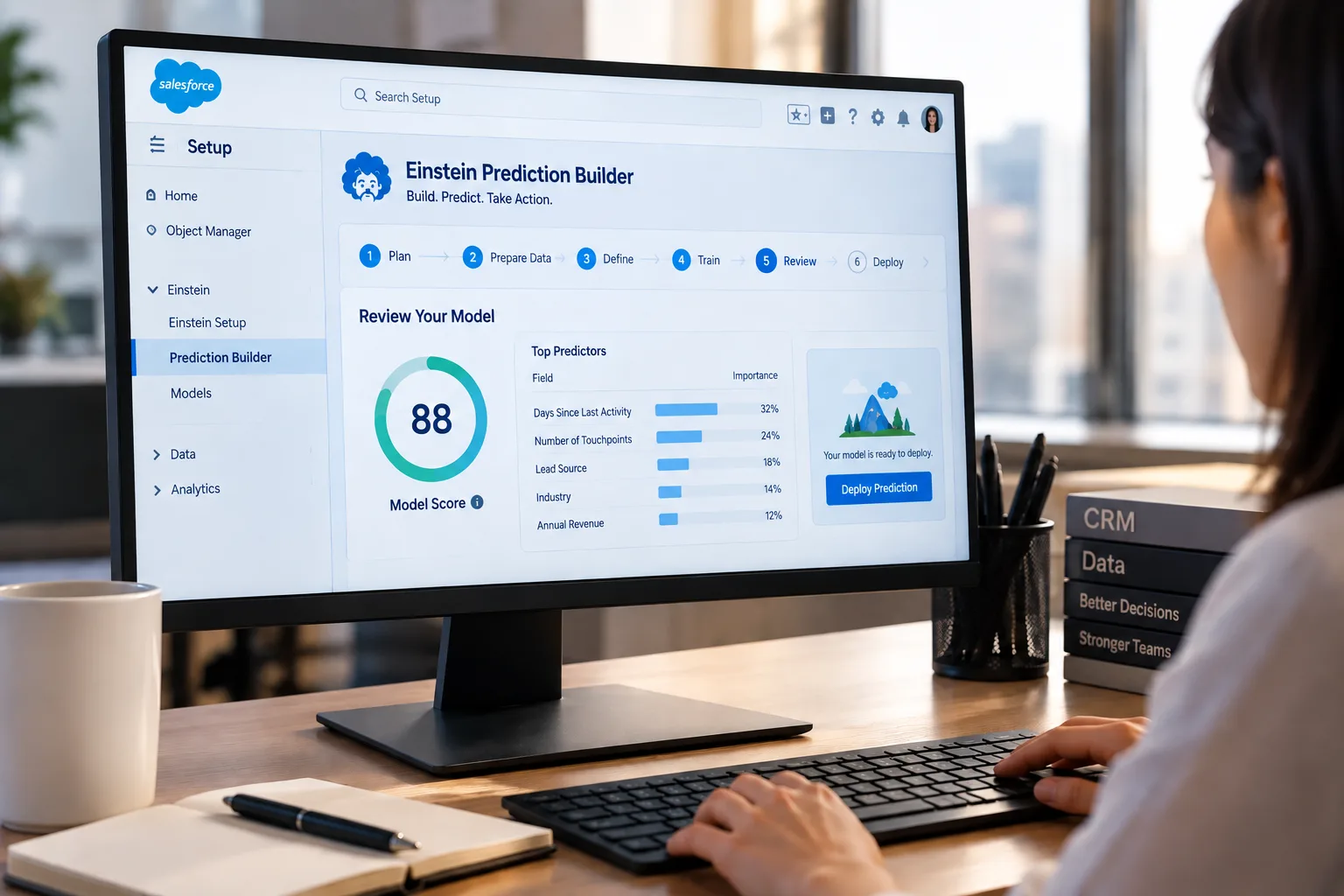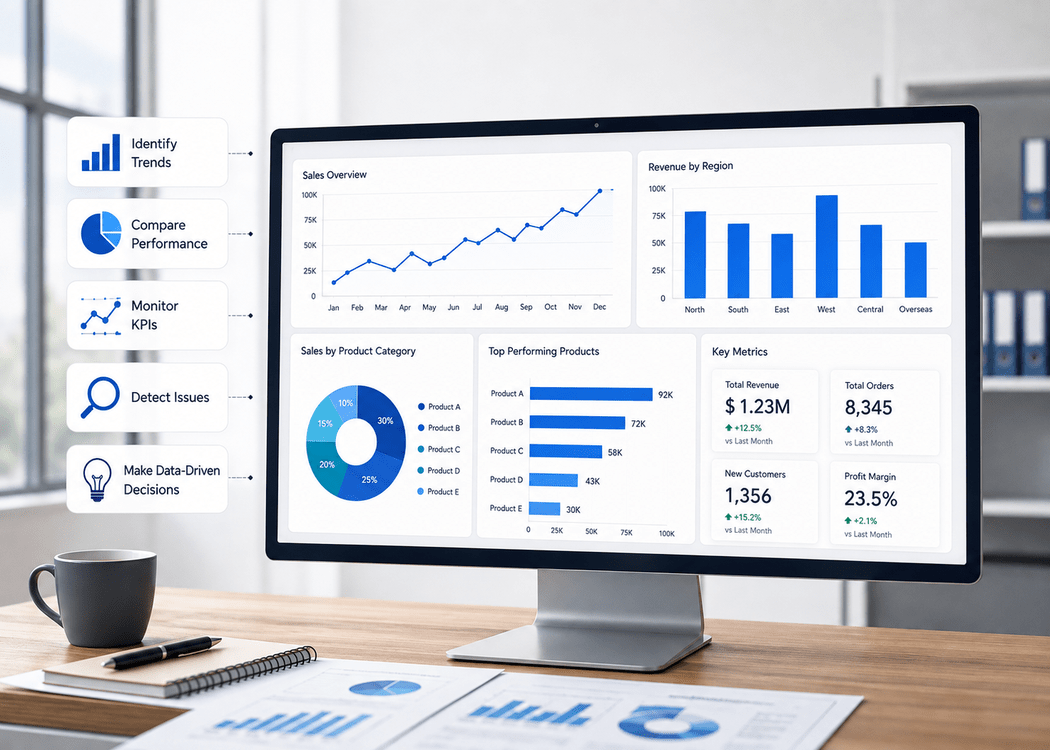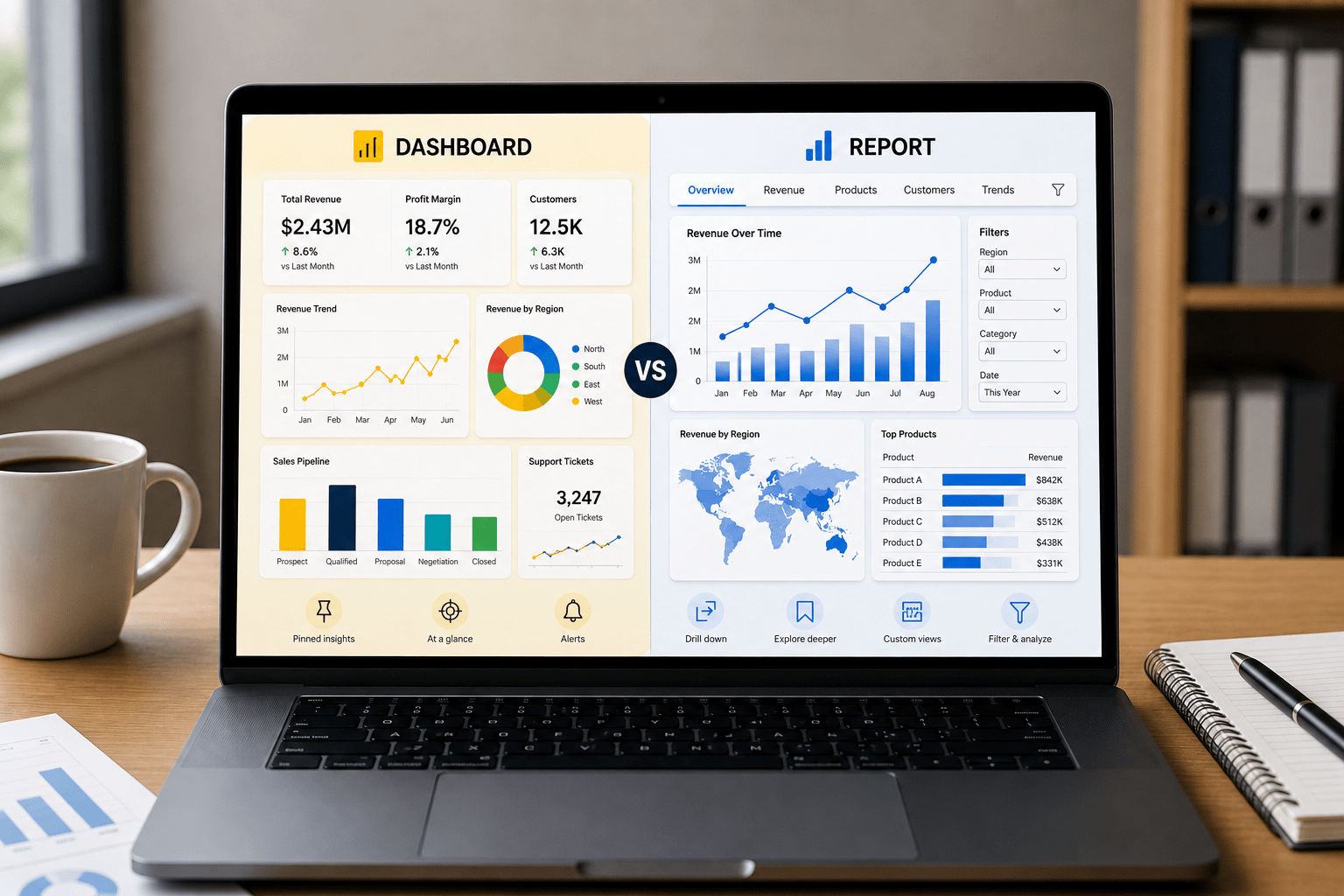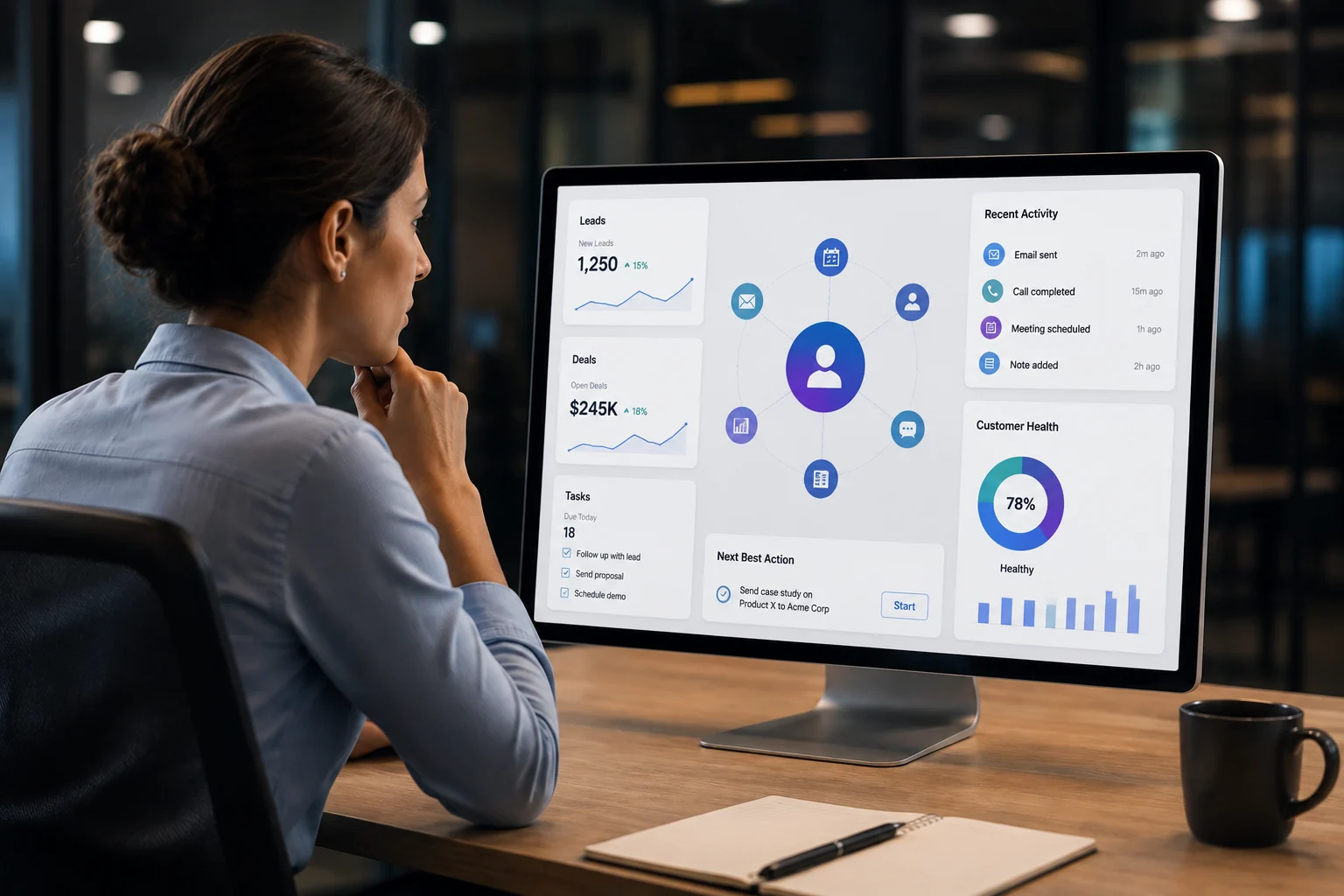
Your reports aren’t changing decisions. Your team argues over which numbers are correct. Your data lives in five different systems, and nobody can clearly say what’s actually driving revenue. If three or more of those sound familiar, your company almost certainly needs a data analytics consultant.
Most businesses don’t realize they’ve hit this wall until something breaks, a failed campaign, a missed forecast, or a budget decision made on numbers that turned out to be weeks old. The Big Data Analytics Consulting Services industry is projected to grow from $26.37 billion in 2025 to $45 billion by 2035, and a large part of that growth is companies finally acknowledging what their data problems are costing them.
This article walks through seven specific signs that it’s time to bring in outside help and what each sign is actually doing to your business in the background.
What Does a Data Analytics Consultant Actually Do?
A data analytics consultant helps businesses turn raw data into decisions.
This includes:
- Understanding what data exists and what’s missing
- Connecting data across systems
- Cleaning and structuring messy datasets
- Building dashboards and KPI frameworks
- Enabling predictive and advanced analytics
The goal is simple: make data usable, reliable, and actionable for real business decisions.
Read Also: How To Choose The Right Data Analytics & Integration Tools
Sign #1 – Your Team Collects Data, But Nothing Changes Because of It
This is the most common sign and the easiest to overlook because it hides behind activity.
You have Google Analytics. You have a CRM. You may even have a weekly report that someone sends out every Monday morning. And yet, the same problems keep coming up in every team meeting. The same questions go unanswered. The same gut calls get made regardless of what the numbers say.
Data collection is not the same as data activation. When reports exist, but decisions don’t change, the data isn’t structured around real business questions; it’s structured around what was easy to pull. A consultant identifies which metrics actually connect to your goals and cuts the rest.
This is also where data visualization plays a practical role, not making charts look good, but making the right information visible to the right person at the right moment. When that gap closes, people start using data instead of filing it away.
Sign #2 – Business Decisions Still Come Down to Gut Instinct
Walk into most leadership meetings and you’ll see slides packed with numbers followed by decisions made almost entirely on experience and opinion.
That’s not always wrong. Experience matters. But when data exists and still isn’t influencing decisions, that’s a structural problem, not a people problem.
Research cited by Tableau shows that data-driven companies are 23 times more likely to acquire customers than those relying on intuition. The gap between having data and actually using it to decide is exactly where a data analytics consultant works.
They don’t take over decision-making. They build the infrastructure the models, the KPI frameworks, the reporting cadence that makes data a natural part of how your team already thinks and plans.
Sign #3 – Your Data Sits in Too Many Disconnected Systems
Sales lives in the CRM. Finance runs on a separate platform. Marketing tracks performance in its own tool. And when someone needs a full picture of the business, they spend three days pulling exports, matching columns, and hoping the totals add up.
This is a data silo problem, and it’s more common than most companies admit. According to an Ivanti survey of over 1,200 IT and cybersecurity professionals, more than half reported that their organization’s data is siloed, and two in five said those silos directly cause IT inefficiencies.
The downstream effects go further than wasted time. Teams working from different data sources reach different conclusions. Debates happen not because people disagree on strategy, but because they’re looking at different numbers from different systems at different points in time.
A data analytics consultant maps your full data landscape, identifies where the gaps and overlaps are, and builds pipelines that give every department a single, consistent view to work from.
Sign #4 Spreadsheets Are Running Your Reporting
There is nothing wrong with spreadsheets for basic tasks. But when your reporting process involves exporting from five systems, pasting into Excel, triple-checking formulas, and sending a file called “Final_Report_v4_REAL.xlsx,” you have outgrown what manual tools can handle.
Spreadsheet-based reporting breaks down in predictable ways. A single formula error can distort an entire report. Multiple people update different versions at the same time. By the time the file lands in someone’s inbox, the data is already days old, and the business has moved on.
Research from Phocas Software confirms that when company data is manually imported into spreadsheets from multiple sources, errors are difficult to catch before they influence decisions. And version control issues compound those errors across teams.
A consultant replaces that process with automated, reliable reporting that refreshes on a set schedule or in real time. Your team spends less time building reports and more time actually reading them.
Sign #5 – You Can’t Track ROI on Your Key Initiatives
Marketing spent $60,000 last quarter. Which campaigns drove pipeline? Which channels converted? Which audience segments burned through the budget without producing anything?
If those questions are hard to answer with confidence, you have a tracking and attribution problem. And it extends beyond marketing. The same blind spots appear in product launches, operational changes, and new hire ramp-up time.
When tracking gaps go unnoticed, teams keep investing in things that don’t work, not because they aren’t paying attention, but because the data simply isn’t there to show them what’s happening. Broken attribution tends to stay invisible until someone asks a direct question, and nobody can answer it.
A data analytics consultant audits your measurement setup, finds where the gaps are, and builds an attribution model that actually connects spending to outcomes. The goal isn’t perfect data, it’s data reliable enough to make better calls than you’re making right now.
Sign #6 – You’re Growing, But Your Analytics Isn’t Keeping Up
Scaling a business is exciting. It’s also the exact point where analytics setups that worked fine at 50 employees start cracking at 200.
New product lines, new markets, more customers, but the reporting is still built around how the company looked two years ago. The metrics being tracked don’t reflect current priorities. The dashboards show what used to matter, not what matters now.
According to the IDC Worldwide Digital Transformation Spending Guide, global digital transformation spending is projected to reach $3.9 trillion by 2027, yet only 21% of companies are successfully scaling their digital transformation initiatives. Analytics infrastructure is a significant reason why the other 79% hit a ceiling.
If your data setup isn’t growing with the business, the decision lag compounds over time. A consultant rebuilds analytics around where the company is headed, not where it’s been. For teams considering more dedicated internal support during a growth phase, it’s also worth exploring what it means to hire a data analyst who can own this function once the foundation is properly built.
Read Also: How Much Does It Cost to Hire a Data Analytics Consultant in 2026
Sign #7 – You Want Predictive Analytics or AI, But the Data Isn’t Ready
Everyone wants predictive analytics churn modeling, demand forecasting, lead scoring. The use cases are real and the returns are measurable. But none of it delivers if the underlying data is incomplete, inconsistent, or poorly structured.
Gartner predicts that half of all business decisions will be augmented or automated by AI agents in the coming years. But they are equally clear that AI must be tightly aligned with data quality, analytics structure, and governance frameworks to produce reliable results.
Companies that skip the data readiness step and jump straight to AI implementation end up with models that generate poor predictions, teams that don’t trust the outputs, and projects that get quietly shelved six months in.
A data analytics consultant does the foundational work first, cleaning, structuring, and governing your data so that when AI or advanced analytics is introduced, it actually holds up.
Data Analytics Consultant vs In-House Analyst
This is a common question.
In-house analyst:
- focuses on day-to-day reporting
- works within existing systems
- limited by the current setup
Data analytics consultant:
- identifies structural problems
- builds systems and frameworks
- sets long-term strategy
- accelerates transformation
In many cases, companies start with a consultant and later build an internal team on top of that foundation.
What Happens When You Keep Ignoring These Signs?
Nothing dramatic at first. That’s part of why it’s so easy to delay.
But the cost compounds quietly. Slow decisions add up to missed windows. Bad data sends the budget to the wrong places. Teams spend hours on reporting that should take minutes. And when the company eventually tries something bigger a new BI platform, an AI initiative, a large-scale forecasting model, it hits a wall because the data foundation was never built to support it.
Companies that address these problems early tend to move faster, waste less, and scale cleaner. Those who wait typically end up paying more to untangle a larger mess.
Read Also: How Real-Time Analytics Drives Smarter Operational Choices
What to Look for When Hiring a Data Analytics Consultant
Not every consultant is the right fit. A few things worth prioritizing before you commit:
Industry experience matters more than certifications. Someone who has worked in your sector understands your data problems before you finish explaining them.
Watch how they open the conversation. A good consultant asks about your business goals before recommending any tool or platform. If the first meeting is mostly a software pitch, look elsewhere.
Look for evidence of outcomes, not just deliverables. Case studies that show what changed in the business, not just what was built, are a far better signal than a list of platforms they’ve worked with.
According to Analytics8, a strong data analytics consultant starts by understanding how analytics fits into the company’s overall strategy, asking direct questions about what business users actually need from data and where internal teams are getting stuck. That diagnostic mindset is what separates a consultant from a vendor.
Still Guessing With Your Business Data?
When reports are inconsistent, teams rely on spreadsheets, and decisions take too long, growth becomes harder to manage. OzaIntel helps businesses organize fragmented data, improve reporting accuracy, and build analytics systems that support faster, more confident decision-making across teams.
Conclusion
Most companies recognize three or four of these signs before they start looking for outside help. That’s completely normal; the need tends to build gradually, and it isn’t always obvious when internal resources have hit their limit.
The seven signs covered here, inactive reports, gut-based decisions, data silos, spreadsheet dependency, missing ROI tracking, scaling gaps, and AI readiness problems, don’t always appear together. But when two or three start showing up at the same time, the cost of waiting usually outweighs the cost of taking action.
If a few of these situations look familiar, OzaIntel’s data analytics services are built for exactly this stage, helping companies move from data overload to clear, confident decisions that actually move the business forward.