Artificial intelligence and machine learning are no longer technologies reserved for large enterprises or experimental projects. They have become practical business tools that help organizations reduce costs, improve efficiency, and make faster, data-driven decisions. From customer service and inventory planning to fraud detection and predictive maintenance, companies across industries are using AI to solve operational challenges that traditional processes struggle to handle.
According to McKinsey, organizations that successfully adopt AI are already reporting measurable improvements in productivity, operational efficiency, and business performance. The difference is no longer whether AI works, but where it delivers the greatest value.
5 Problems AI and ML Can Solve
1. Slow, Inconsistent Customer Support Is Draining Your Team
Support tickets pile up. Response times stretch past what customers will tolerate. Agents burn hours on the same handful of questions: order status, password resets, return policies, while harder cases wait in the queue.
This is one of the clearest business challenges solved by AI. Here is what the data shows:
- Lower costs, faster resolution: Salesforce found that organizations deploying AI agents in service saw an average 20% reduction in both service costs and case resolution times.
- Dramatically faster response: Gartner’s research shows AI-driven service tools now respond in roughly 3.8 seconds on average, compared to about 28 seconds for a human agent picking up a routine query.
- Volume off your team’s plate: Routing the repetitive 60 to 70% of inbound volume, order tracking, FAQs, simple troubleshooting, to an AI agent frees your human agents for escalations, complaints, and anything that needs judgment.
- A triage layer, not a replacement: Customers still want a human for anything emotional or high-stakes. AI just needs to stop wasting that human’s time on the easy 70%.
Customer support automation is exactly the kind of workflow automation that gets built into client CRM environments through Salesforce Einstein Discovery and Prediction, pairing predictive scoring with automated case routing so support teams see the right ticket at the right time instead of working a flat queue.
2. Guessing at Demand Is Costing You in Inventory
Overstock ties up cash. Stockouts lose sales and trust. Most demand planning still runs on last quarter’s spreadsheet and a manager’s gut feeling, and that approach breaks down the moment a promotion, a supply disruption, or a seasonal spike hits.
Gartner reports that AI-driven demand planning improves forecast accuracy by 20 to 30% over traditional statistical methods, directly reducing both overstock and stockout scenarios. That is not a marginal gain. For a mid-sized retailer or distributor, a 20% accuracy improvement can mean the difference between a warehouse full of dead stock and inventory that actually matches what customers are buying.
Here is what changes with predictive analytics applied to demand forecasting:
- More inputs, better predictions: The model factors in seasonality, promotional calendars, pricing changes, and even external signals like weather or regional trends, not just last year’s sales figures.
- Continuous, not static: Forecasts recalculate as new data comes in, replacing the static monthly spreadsheet with something that adjusts in real time.
- Fewer overstock and stockout scenarios: Better accuracy means less cash tied up in dead inventory and fewer lost sales from empty shelves.
- A planned process, not a reactive scramble: Combined with supply chain optimization and better sales forecasting, inventory management shifts from firefighting to forward planning.
We cover this in more depth in how predictive analytics improves decision-making for enterprises, one of the more measurable AI use cases for businesses running physical inventory.
3. Fraud and Risk Are Getting Harder to Catch Manually
Fraud has changed shape. Synthetic identities, deepfake-assisted account takeovers, and AI-generated phishing have made manual review processes slower and less reliable than they were even two years ago.
Here is where the numbers stand:
- Losses are climbing: Experian’s 2026 Future of Fraud Forecast found that nearly 60% of companies saw fraud losses rise year over year.
- Real-time scoring catches it earlier: Machine learning based transaction monitoring flags patterns that deviate from a customer’s normal behavior as they happen, scoring risk before a payment clears instead of after a chargeback lands.
- Fewer false positives, not just more flags: Well-tuned models reduce the false positives that frustrate legitimate customers while still catching genuine threats.
The reality is that attackers are increasingly using AI to carry out fraud, making anomaly detection an essential safeguard rather than an optional feature, especially for financial institutions, insurers, and businesses handling large volumes of payments or identity verification. This is a textbook case of enterprise AI solutions and machine learning solutions solving a problem that has outgrown human review capacity, and it pairs directly with the kind of data analytics services that give risk teams a single, trustworthy view of transaction activity instead of siloed reports.
4. Unplanned Equipment Downtime Is Bleeding Budget
Ask any operations manager what keeps them up at night, and unplanned downtime is usually near the top. A single unexpected failure can cost a manufacturing line anywhere from $50,000 to over $250,000 an hour depending on the industry, and most plants still run maintenance on a fixed schedule instead of an actual condition.
Here is what changes with predictive maintenance:
- Less downtime: McKinsey’s research on industrial operations found that AI-driven predictive maintenance can reduce unplanned downtime by up to 50%.
- Lower maintenance spend: The same research points to maintenance cost reductions of 10 to 40%.
- Early warning instead of a fixed calendar: Sensors tracking vibration, temperature, and pressure feed a model that flags the early signs of wear well before failure, instead of replacing a part just because the calendar says so.
- Planned fixes, not emergencies: Maintenance teams schedule the repair on their own timeline instead of scrambling during an unplanned outage.
This is one of the more mature AI implementation in business stories because the ROI is so directly measurable: fewer emergency repairs, longer equipment life, and a maintenance team that spends its time on planned work instead of firefighting. It is also a strong example of process optimization through operational efficiency gains that show up on the P&L within the first year of deployment.
5. Slow, Gut-Feel Decision Making
A lot of “strategy” is still a senior leader’s instinct, backed up by a monthly report that was already stale by the time it landed in their inbox. Qlik’s research on enterprise decision-making found that 45% of C-suite executives still make decisions based on gut feeling, and 42% admit they doubt the accuracy of the data they do have. That is not a small gap. It means nearly half of the biggest calls at a company are made without a clear, current view of what is actually happening.
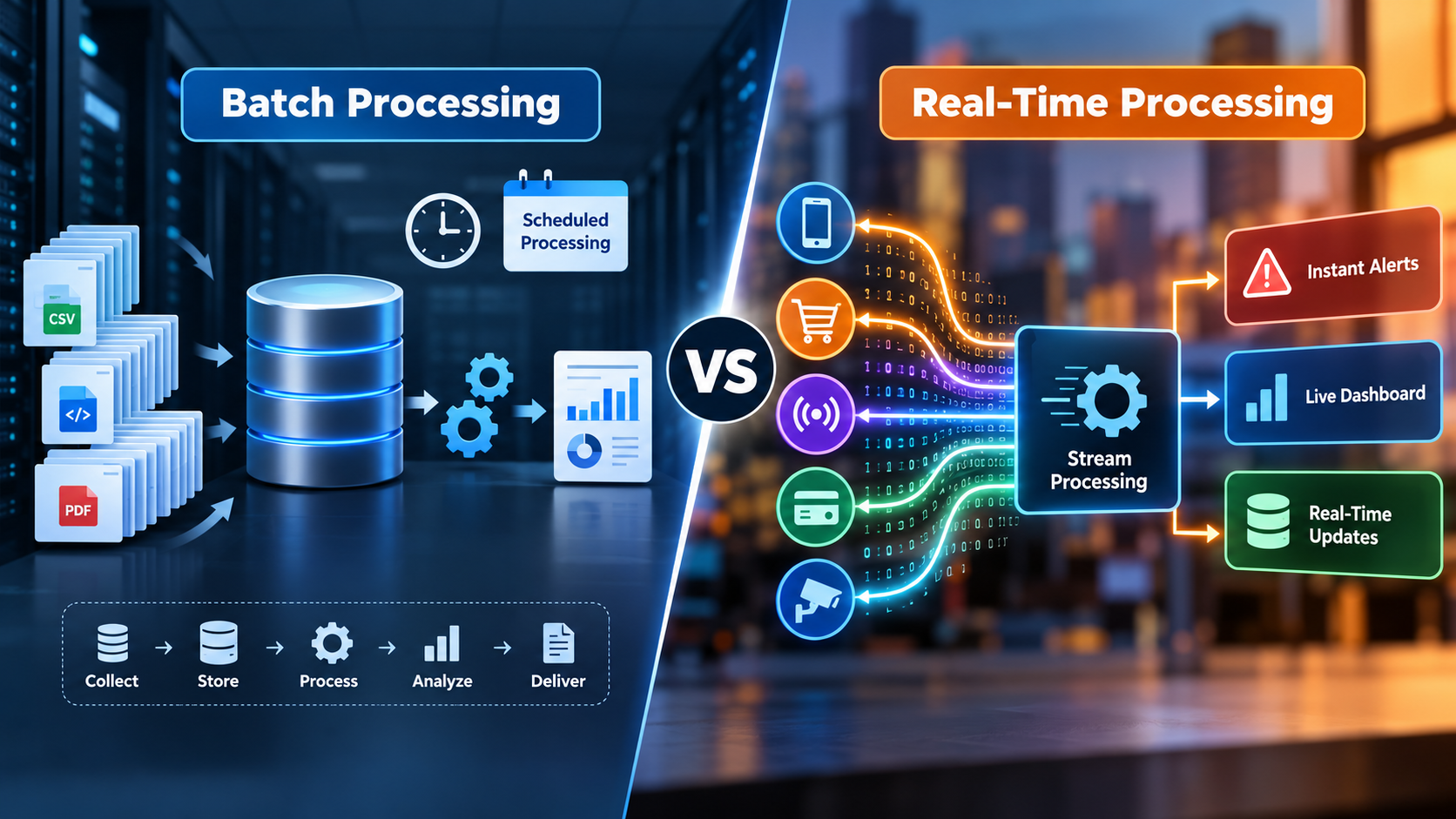
The fix is not more dashboards for the sake of dashboards. It is real-time analytics that actually reaches the person making the call before the moment passes.
What changes when companies make that switch:
- Faster calls: Companies that replace static monthly reporting with real-time analytics report a 29% improvement in decision speed, according to research compiled by Hydrogen BI.
- Lower costs: The same shift is tied to a 21% reduction in operational costs, since fewer decisions get made on outdated numbers that need correcting later.
- Less second-guessing: Closing the gap between something happening and someone finding out about it cuts down on the 42% of leaders who currently doubt their own data.
- Fewer stale reports: A monthly export gets replaced by a live view of the metrics that actually move the business, so nobody is reacting to numbers that are already two weeks old.
This is where decision intelligence and business intelligence stop being buzzwords and start being infrastructure. Predictive analytics applied to the metrics that actually drive a business, pipeline health, cash position, churn risk, capacity, gives leaders a current answer instead of a two-week-old one. It is the same principle behind data visualization services built for this exact use: the goal is not a prettier report, it is getting the right number in front of the right person early enough that it changes the decision instead of just explaining it after the fact.
Key Takeaways at a Glance
| Business Problem | AI/ML Approach | Typical Result |
| Slow, inconsistent customer support | Customer support automation, AI agents | Service costs and case resolution times down by an average of 20% (Salesforce) |
| Guessing at demand instead of predicting it | Demand forecasting, predictive analytics | 20% to 30% better forecast accuracy over traditional methods (Gartner) |
| Fraud and risk slipping past manual review | Fraud detection, anomaly detection | Real-time risk scoring as fraud losses climb across nearly 60% of companies (Experian, Deloitte) |
| Equipment breaking down without warning | Predictive maintenance, anomaly detection | 10% to 50% less downtime, up to 40% lower maintenance costs (McKinsey) |
| Slow, gut-feel decision making | Real-time analytics, | 29% faster decisions and a 21% drop in operational costs (Hydrogen BI research) |
Frequently Asked Questions(FAQs)
The clearest, most measurable wins right now are customer support automation, demand forecasting, fraud detection, predictive maintenance, and real-time decision making. Each has documented accuracy and cost improvements from sources like Gartner, McKinsey, Salesforce, Deloitte, and Qlik, rather than projected or theoretical gains.
Customer support automation and predictive maintenance tend to show measurable ROI the fastest, often within a single quarter, because the cost savings (lower case resolution times, fewer emergency repairs) are easy to track against a clear baseline.
No. Cloud-based enterprise AI solutions and CRM-native tools like Salesforce Einstein have made predictive scoring, automated routing, and demand forecasting accessible to mid-sized companies without a data science team on staff.
Predictive maintenance and customer support automation projects often show measurable results within the first two to three months of deployment. Real-time analytics for decision-making can show a difference even faster, often as soon as the dashboards replace the old monthly report cycle, though the exact timeline depends on data quality and how well the AI system connects to existing CRM or operations software.
Usually not. Most of the value comes from layering predictive analytics and automation on top of a CRM or operations platform that is already in place, rather than ripping out existing infrastructure.
AI is the broader concept of a system performing tasks that normally need human judgment, while machine learning is the specific method most business AI relies on today: models that improve their predictions as they process more data, whether that is demand patterns, fraud signals, or support ticket volume.
Cost depends heavily on scope. A CRM-native feature like predictive lead scoring can be a configuration project measured in weeks, while a custom fraud detection or predictive maintenance system built on proprietary sensor or transaction data is a larger engagement. Most companies start with one narrow, high-impact use case rather than a company-wide rollout.
Yes. Many of the tools behind AI business solutions, from Salesforce Einstein to cloud-based fraud detection APIs, are built to scale down to a single team or department, not just a Fortune 500 rollout.
Clean, connected historical data in the specific area being addressed: past support tickets for automation, transaction history for fraud detection, sales and inventory records for demand forecasting, or sensor logs for predictive maintenance. A model is only as reliable as the data feeding it, which is why a data audit usually comes before tool selection.
Not entirely. The businesses seeing the best results treat AI as a triage layer that absorbs repetitive, high-volume work, like FAQs and routine tickets, while people handle escalations, judgment calls, and anything that needs a human tone. Full automation for every interaction tends to hurt satisfaction rather than help it.
Conclusion
None of these five problems get solved by buying a tool and hoping for the best. Every example above worked because the business paired the right model with clean data and a workflow that actually used the prediction instead of letting it sit in a dashboard. That is the difference between AI implementation in business that shows up on a P&L statement and a pilot project that quietly dies after six months.
Artificial intelligence for business works best when it is scoped to a specific, measurable problem: a forecast that keeps missing, a churn number that keeps climbing, a support queue that keeps growing. Start with one problem from this list, prove the ROI, then expand. Teams looking to map their own version of this list against a specific operational bottleneck can see how these services fit together on OzaIntel’s services page, or reach out directly through the contact page to talk through where the first pilot should start.