Hiring a data analytics consultant in 2026 typically costs between $50 and $350 per hour, depending on experience level, specialization, and how you structure the engagement. For project-based work, budgets start around $5,000 for a focused audit and can reach $150,000 or more for a full analytics transformation. Monthly retainers usually fall between $3,000 and $20,000.
That’s the direct answer. But the number on its own tells you nothing useful. The same $150/hour rate can be an excellent investment or a complete waste of money depending on what you actually need, who you hire, and whether the engagement is set up to deliver results.
This article breaks down every layer of data analytics consulting costs — the ranges, the variables, the hidden fees most vendors won’t tell you about, and how to decide which model actually fits your situation.
What Is a Data Analytics Consultant and What Do They Actually Do?
Before you can assess cost, you need to understand what you are buying. A data analytics consultant is not a data entry person, not a report builder, and not simply someone who knows Excel. Their job is to help your business make better decisions using data.
In practice, that means they come in, assess what data you have and how it flows through your systems, identify gaps, and then build the analytical infrastructure, frameworks, or dashboards that give your leadership team real visibility into performance.
The specific work varies by engagement, but typically covers:
- Auditing your existing data sources, pipelines, and reporting processes
- Designing a data strategy aligned to your business goals
- Selecting and implementing the right analytics tools and platforms
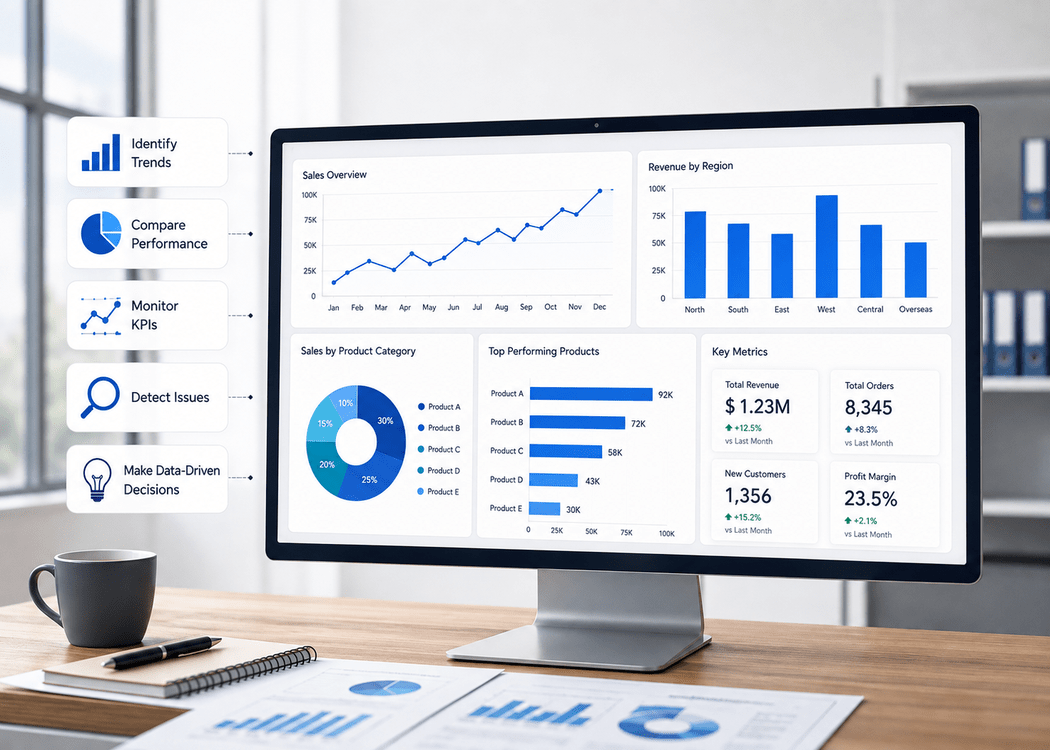
- Building dashboards and data visualizations that are actually used
- Creating KPI frameworks and defining what metrics matter
- Identifying patterns, forecasting trends, and surfacing hidden opportunities
- Documenting processes and training internal teams on what was built
Industries that rely heavily on analytics consultants include healthcare, financial services, retail, manufacturing, SaaS, logistics, and e-commerce. Within those verticals, sub-specializations matter. A consultant with deep experience in Salesforce CRM Analytics brings a very different skill set than someone focused on supply chain data, even if their hourly rate looks similar on paper.
Data Analytics Consultant Cost Breakdown in 2026
Hourly Rates by Experience Level
Most consultants and analytics firms price their work by the hour, especially for discovery phases, audits, and strategy engagements. Here is how rates break down across experience levels in 2026:
| Consultant Level | Typical Hourly Rate |
| Entry-Level / Junior | $50 – $100/hr |
| Mid-Level | $100 – $175/hr |
| Senior / Specialist | $175 – $250/hr |
| Expert / Niche (AI, Salesforce Analytics, ML) | $250 – $350/hr |
According to Glassdoor (May 2026), the average salary for a data analytics consultant in the United States is $120,293 per year, or roughly $58 per hour for salaried positions, with top earners reaching $201,843 annually. When you hire externally a consultant or a firm you are typically paying a premium above that baseline because you are also covering the consultant’s overhead, expertise access, and the flexibility of not being a full-time hire.
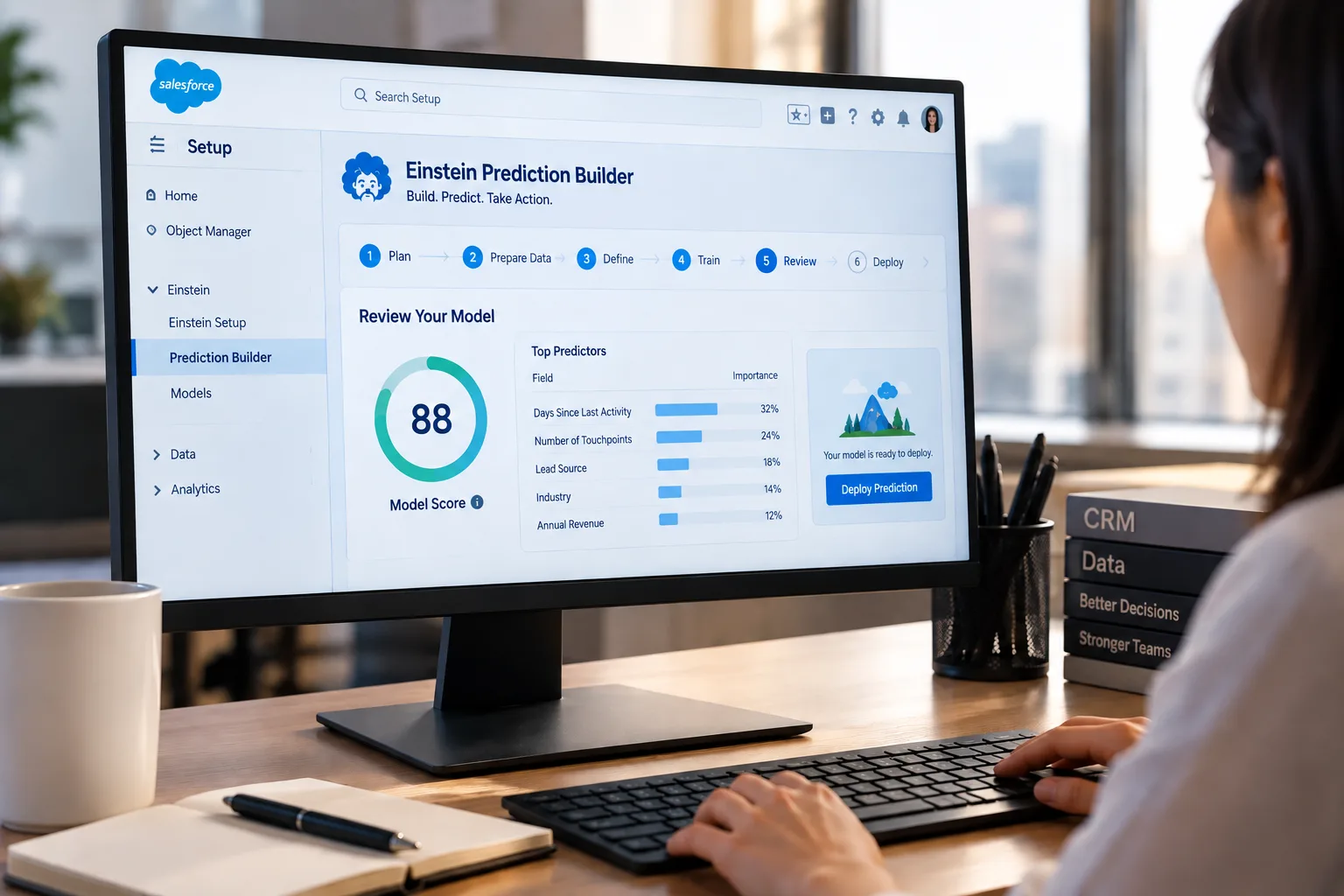
These rates can shift significantly based on niche specialization. A consultant who works specifically with Salesforce Einstein Discovery and AI-powered predictions will price their time differently than a generalist analyst, and often delivers far more targeted value for businesses already in the Salesforce ecosystem.
Project-Based Pricing
Many businesses prefer a fixed project price because it makes budgeting cleaner. Here is what you can realistically expect:
Small scope projects ($5,000 – $15,000): This covers a focused data audit, a single dashboard build, or a reporting cleanup for one business unit. You come in with a specific problem; the consultant solves it.
Mid-scope projects ($15,000 – $50,000): This is where most growing businesses land. It covers analytics strategy development, data pipeline architecture, multi-dashboard builds, and integration work across two or three systems. This could include connecting your CRM, marketing platform, and financial data into a single reporting layer.
Large-scale engagements ($50,000 – $150,000+): A full analytics transformation. This involves audit, strategy, tool selection, implementation, team training, and post-launch support. Enterprise-grade work with multiple stakeholders and systems. Companies implementing AI and machine learning services alongside analytics infrastructure typically fall here.
Monthly Retainer Model
Some businesses need ongoing analytics support rather than a one-off project. A retainer gives you consistent access to a consultant or team without hiring full-time.
Retainer ranges: $3,000 – $20,000 per month
The lower end usually covers part-time advisory, monthly reporting updates, and light dashboard maintenance. The higher end typically includes a dedicated consultant or small team, regular strategy reviews, and hands-on work with your data every week.
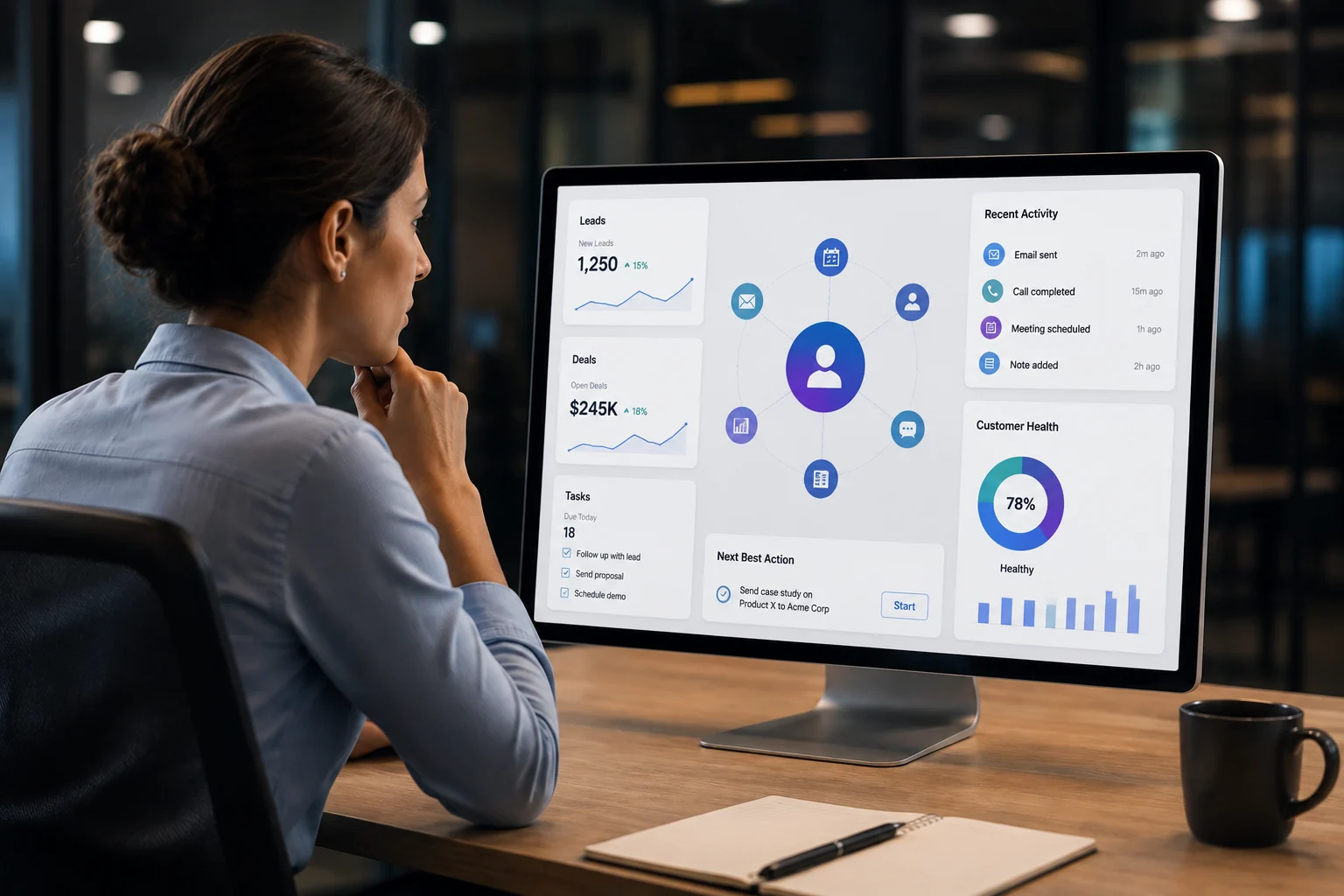
This model works particularly well for businesses that run their customer data through Salesforce and need consistent analytics support to keep reports accurate, KPIs up to date, and leadership dashboards meaningful.
Read Also: 7 Signs Your Company Needs a Data Analytics Consultant
6 Key Factors That Determine the Final Cost
No two analytics engagements are priced the same. These six factors explain why a $75/hour consultant on one project might cost you more than a $200/hour expert on another.
1. Scope and Complexity: A focused dashboard build for a single department is very different from building an end-to-end data strategy that spans sales, marketing, operations, and finance. The more systems involved, the more data sources to connect, and the more business logic to account for, the higher the cost.
2. Specialization Required: Niche expertise carries a premium. If your business runs on Salesforce and you need someone who understands CRM analytics, custom objects, and Salesforce reporting, that is not a generalist role. Expect to pay more. The same applies for AI-integrated analytics, machine learning model development, or advanced data visualization work.
3. Engagement Type: Freelancers, boutique firms, and large consultancies have very different pricing structures. We cover this in detail in the next section.
4. Geographic Location: A US-based senior analytics consultant charges differently than a consultant in Eastern Europe or Southeast Asia. Nearshore and offshore options can reduce hourly rates by 40–60%, though time zone coordination, communication overhead, and quality consistency are factors to weigh carefully.
5. Tool Stack and Licensing: The consultant’s fees are one line item. The tools they implement can be another. Tableau consulting, Power BI, Salesforce Analytics Cloud, and cloud data warehouse platforms often come with their own licensing costs that sit outside the consulting fee. Make sure any proposal you receive separates these clearly.
6. Timeline and Urgency: A project scoped over three months costs less than the same project compressed into three weeks. Rush work increases cost because it requires consultants to reprioritize other client work or pull in additional team members to hit your deadline.
Freelancer vs. Boutique Analytics Firm vs. Large Consulting Agency
This is one of the most consequential decisions you will make when hiring, and price is only part of it.
Freelancer: $50 – $150/hour A skilled freelance analyst can be excellent for short, well-defined tasks — cleaning a dataset, building a specific dashboard, or advising on tool selection. The value is cost efficiency and flexibility. The risk is limited accountability, no backup if they become unavailable, and no broader team support if the project scope grows unexpectedly.
Boutique Consulting Firm: $100 – $250/hour A boutique firm brings you a team rather than an individual. You get industry specialization, project management, peer review on deliverables, and a more structured engagement process. For most mid-size businesses, this is where the best ROI lives. You get senior expertise without the enterprise markup, and your project does not get handed to a junior analyst after the first kickoff call.
Large Consulting Agencies: $250 – $500+/hour Firms like Deloitte, Accenture, or McKinsey Analytics operate at enterprise scale. Their pricing reflects their brand overhead, large teams, and compliance infrastructure. For global enterprises with complex multi-country data environments, this may be justified. For a growing business with a clear analytics problem, it is usually not the most efficient use of budget.
The reality is that most businesses solving real analytics problems building better reports, getting visibility into Salesforce CRM performance, or rolling out data visualization services across departments get the best combination of quality and value from a specialized boutique firm that knows their industry.
What the Global Market Data Says About Where Costs Are Headed
The data analytics consulting market is not shrinking. Demand for qualified analytics consultants is rising faster than the supply of credible experts, which means rates are not coming down.
According to Fortune Business Insights, the global data analytics market was valued at $82.23 billion in 2025 and is projected to grow to $104.39 billion in 2026, with further expansion expected to reach $495.87 billion by 2034 at a compound annual growth rate of 21.50%.
On the consulting services side specifically, the Data Analytics Consulting Services market was valued at $10.5 billion in 2024 and is forecast to reach $20.3 billion by 2033, growing at a CAGR of 8.2% from 2026 onward, according to Verified Market Reports.
What this means practically: the consultants who are genuinely good at this work have more options than they did two years ago. They are more selective about clients, they price higher, and they expect better-scoped engagements. Businesses that try to find “cheap” analytics help increasingly get junior-level output that requires expensive fixes later.
Investing in quality analytics consulting now, when your competitors are also investing, is a competitive issue. Waiting costs you ground.
Hidden Costs Most Businesses Overlook
Even a well-scoped engagement will surface additional costs that were not in the original proposal. These are the ones that catch businesses off guard most often.
Data preparation and cleaning time. Depending on the state of your data, 30–40% of total project hours can go toward cleaning, standardizing, and validating data before any analysis happens. If your CRM has duplicate records, your spreadsheets have inconsistent naming conventions, or your systems do not talk to each other cleanly, this phase expands fast.
Tool and software licensing. If the engagement involves Tableau, Power BI, Salesforce Analytics Cloud, a cloud data warehouse like Snowflake or BigQuery, or an ETL platform, those subscriptions come on top of consulting fees. Some firms bundle licensing recommendations into the project; others leave you to source them separately.
Internal time investment. Your team will need to participate. Initial briefings, ongoing reviews, feedback rounds, and final handovers take real time from your operations, sales, and IT staff. Budget for this internally, or the engagement slows down at your cost.
Post-project maintenance. Dashboards built today need to be updated as your business changes. If you hire someone to build and then leave, you will need either a maintenance retainer or an internal person capable of managing the environment they set up.
Team training. If the consultant builds something sophisticated and your team cannot use it independently, you have a sunk cost. Quality engagements include knowledge transfer. Make sure this is explicitly in scope before you sign.
When Does It Make Sense to Hire a Data Analytics Consultant?
There are clear signals that hiring a consultant is the right move, and being honest about them saves you time and money.
You have data but no process to use it. Most businesses collect far more data than they analyze. If your team cannot tell you which product line is most profitable, which customers are most likely to churn, or why revenue dipped in a specific month, you have an analytics gap. A consultant can fix it.
Your team lacks the specific technical skill. Having someone who can run reports is different from someone who can architect a data strategy, build predictive models, or configure Salesforce Einstein Analytics to surface intelligent recommendations. If the skill is not in-house, the cost of hiring it externally is almost always lower than the cost of leaving the problem unsolved.
You need a one-time audit before investing in tools. Before spending $50,000 on a software platform, it is worth spending $8,000 on an honest audit of what you actually need. Consultants who specialize in tool selection can save you from expensive mistakes.
You are scaling and need proper infrastructure. Early-stage businesses often outgrow their initial reporting setup. When your spreadsheets cannot handle the volume, when your CRM data and financial data live in silos, or when leadership is making decisions based on conflicting numbers from different departments, it is time to build something better.
You want to stop making gut-feel decisions. Intuition has its place. But businesses that run analytics properly consistently outperform those that do not. A consultant gives you the infrastructure to make evidence-based decisions systematically.
When Should You Build an In-House Team Instead?
Consulting is not always the answer. If your analytics needs are constant, high-volume, and deeply embedded in daily operations, building internal capability eventually makes more sense.
A full-time data analyst in the US earns between $83,000 and $140,000 per year depending on experience and location. A senior analytics engineer or data scientist can command $130,000 to $175,000+. Beyond salary, factor in benefits, recruitment costs, onboarding time, and the ramp period before they are fully productive.
For most businesses, the smarter sequence is: engage a consultant first to solve the immediate problem and build the foundation, then hire internal staff to maintain and grow on top of what was built. Trying to hire internally before you have a clear analytics strategy often results in an analyst spending their first six months trying to figure out what problems they should be solving.
How to Evaluate a Data Analytics Consultant Before Signing
This is where most businesses lose money not in the engagement itself, but in the hiring decision.
Ask for a discovery phase, not a proposal based on a 30-minute call. Any consultant who gives you a fixed-price proposal without deeply understanding your data environment, systems, and business goals is guessing. A reputable firm will ask for a paid or unpaid discovery session before scoping the full project.
Look for relevant industry experience. Analytics in healthcare requires different understanding than analytics in e-commerce. A consultant who has worked with businesses like yours, with similar systems and similar problems, will be productive faster.
Ask what deliverables you actually own. You should own everything — dashboards, documentation, code, and data pipelines. If a vendor retains control of anything you paid to have built, that is a contract issue, not a consulting arrangement.
Check for defined success metrics. Before the project starts, you should agree on what “success” means. If neither party can define what success looks like, the engagement is set up to disappoint.
Red flags to watch for: Vague scope, no clear project plan, no process documentation, reluctance to share past client results, or pressure to commit to a large retainer before any discovery work is done.
If you are considering hiring a dedicated data analytics developer rather than a full consulting engagement, the same vetting principles apply define the scope, the deliverables, and the success criteria before any commitment is made.
What You Should Get for Your Money – A Deliverables Checklist
A quality analytics consulting engagement should produce tangible, documented outputs. If a consultant cannot give you a clear list of what you will receive, that is a problem.
At minimum, a well-run engagement delivers:
- A written data audit report covering current state, gaps, and recommendations
- An analytics strategy roadmap with prioritized next steps
- Dashboard and visualization builds that are tested, documented, and handed over
- Data pipeline architecture that is maintainable by your team or a future consultant
- A KPI framework that ties specific metrics to specific business outcomes
- Full documentation of what was built and how to maintain it
- Training sessions for the internal team who will use the new environment
If you are working with a firm that specializes in Agentic AI or advanced machine learning integrations, you should also expect model documentation, accuracy benchmarks, and retraining protocols.
Making the Right Call for Your Business
The cost of hiring a data analytics consultant ranges from $50 to $350 per hour, with projects running from $5,000 for targeted work to $150,000+ for enterprise-scale transformations. Monthly retainers sit between $3,000 and $20,000 depending on depth of engagement.
Those numbers mean nothing without context. The real question is not what consultants charge. It is what it is costing your business to operate without better analytics — the decisions made on bad data, the revenue left on the table because no one could identify where it was hiding, and the leadership time spent reconciling conflicting numbers from systems that were never properly connected.
Every business that takes analytics seriously eventually reaches the same conclusion: the cost of the engagement is small compared to the value of the clarity it creates.
Start with a scoped project. Define a specific problem. Measure the outcome. Then decide whether to expand the engagement, hire internally, or move to a retainer model. That sequence reduces risk and gives you a clear view of what analytics consulting actually delivers for your specific situation.
OzaIntel partners with businesses across industries to deliver data analytics consulting grounded in measurable outcomes. With 40+ years of combined experience across Salesforce CRM analytics, AI-powered insights, Tableau, and advanced data visualization, the team brings both technical depth and business-side understanding to every engagement. Whether you need a focused audit to understand your data landscape, or a full analytics infrastructure build, OzaIntel works as an extension of your team not a vendor dropping deliverables and disappearing.
Book a free strategy call to talk through your analytics needs and get an honest assessment of what it would take to solve them.
FAQs
Yes. A data analyst typically works within a company, handles day-to-day reporting, and executes predefined tasks. A data analytics consultant is brought in externally to assess your data strategy, solve a specific problem, build infrastructure, or guide decisions at a higher level. You hire a consultant for expertise and outcomes, not ongoing execution.
It depends on scope. A focused audit or single dashboard build can wrap up in two to four weeks. A mid-scope project covering strategy, pipeline setup, and dashboard builds typically runs six to twelve weeks. A full analytics transformation for a growing business can take three to six months.
Yes. Small businesses do not need a $100,000 engagement. Many boutique firms offer focused packages starting at $5,000 to $10,000 that solve one specific problem: a sales dashboard, a CRM reporting setup, or a data audit. Starting small and expanding based on results is a practical approach for businesses with tighter budgets.
A time-and-materials contract bills you for actual hours worked at an agreed rate, flexible, but the final cost can vary. A fixed-price contract locks in a total cost for a defined scope predictable, but scope changes can trigger additional fees. For well-defined projects, fixed price works well. For exploratory or strategy work, time-and-materials is more appropriate.
In most cases, yes. A paid discovery phase typically lasts two to five days of work, lets the consultant properly assess your data environment, define the actual scope, and give you an accurate proposal. Skipping discovery usually means the final cost ends up higher than the original estimate because problems surface mid-project.
Compare the rate against the specific skill being delivered, not just the market average. A $200/hour consultant with deep experience in your industry and your tool stack can deliver more value in 20 hours than a $75/hour generalist in 60. Ask for case studies relevant to your situation, and judge the rate against the expected outcome, not just the number.
In most cases, yes, consulting fees paid for legitimate business purposes are deductible as a business expense. However, tax treatment can vary based on how the engagement is classified, your jurisdiction, and your business structure. Always confirm with your accountant or tax advisor before making assumptions.
Most consulting contracts include a change order process. When new requirements come up outside the original scope, the consultant documents the additional work, estimates the cost, and both parties agree before work proceeds. Before signing any contract, confirm that the scope change process is clearly defined; this protects both sides.
Often, yes. On-site engagements may include travel expenses, accommodation, and a daily rate premium on top of the standard hourly fee. Remote consulting eliminates those costs entirely and has become the default for most analytics work since the majority of the work happens inside data systems, not physically on-site. Clarify this upfront when comparing proposals.
The most important ones: What exactly will I receive at the end of this engagement? Who owns the dashboards, code, and documentation? How do you handle scope changes? What does success look like, and how will we measure it? Who will actually be doing the work, the senior consultant I met, or a junior team member? Getting clear answers to these before signing saves significant headaches later.