Choosing between Salesforce Einstein and custom AI models comes down to one simple question: do you need speed or control?
If your business already runs on Salesforce and you want quick results like lead scoring or forecasting, Einstein is the practical choice. If your needs go beyond CRM, involve complex data, or require full control over how AI behaves, custom models make more sense.
This article breaks down both options in a clear way so you can decide based on your goals, budget, and technical capability.
What is Salesforce Einstein?
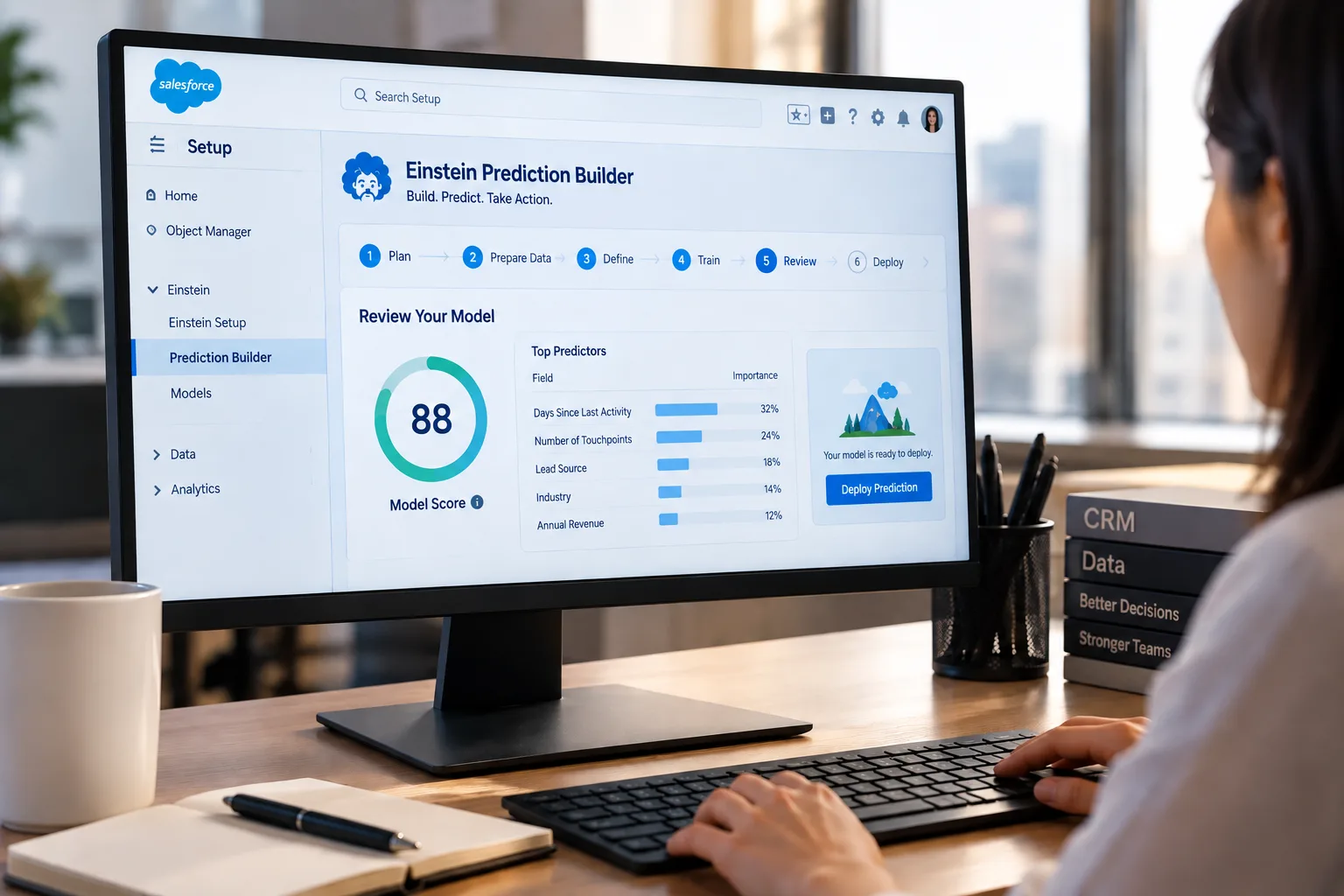
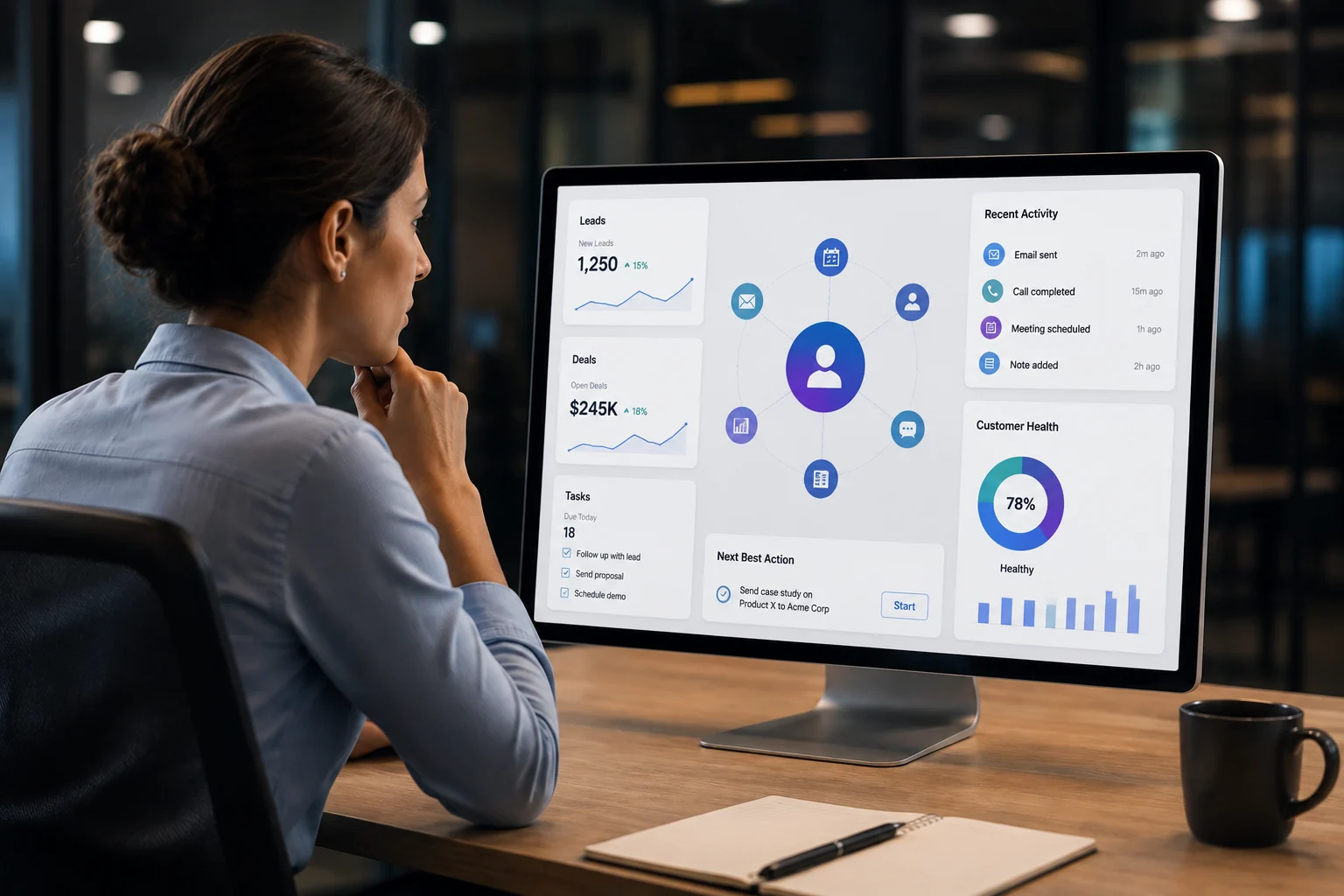
Salesforce Einstein is built directly into the Salesforce platform. It adds AI features to your existing CRM without requiring a separate setup.
It works on the data already stored in your system and turns it into predictions, recommendations, and automated actions.
What it can do:
- Score leads based on conversion chances
- Predict sales outcomes
- Suggest next steps for sales teams
- Automate repetitive CRM tasks
For example, a sales team can see which leads are most likely to convert without building any model from scratch.
Salesforce has shared that AI-driven CRM tools can improve sales productivity by up to 30 percent. That explains why many mid-size and enterprise teams adopt Einstein early.
What Are Custom AI Models?
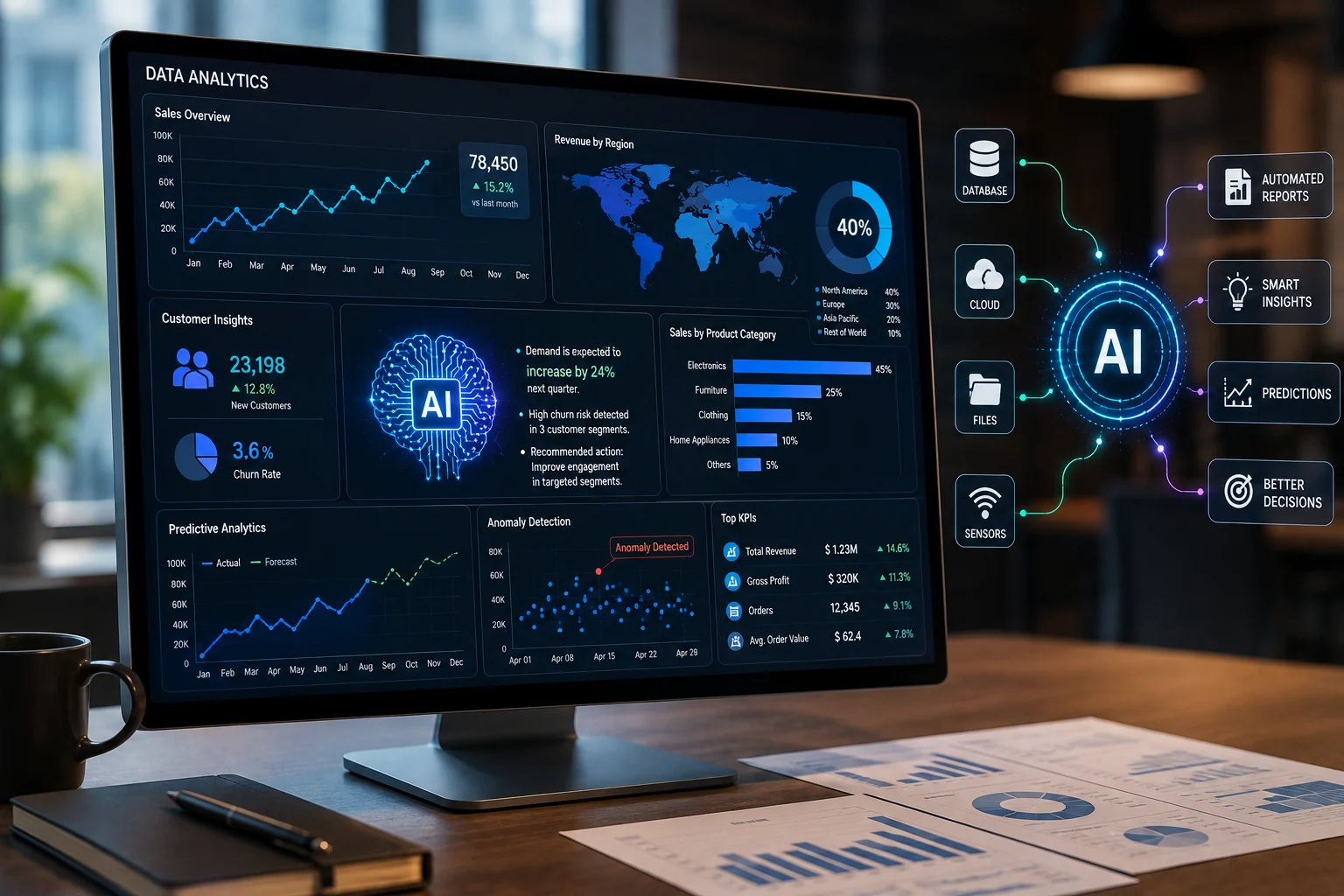
Custom AI models are built specifically for your business using your data, rules, and goals.
These are developed using technologies like Python, TensorFlow, or cloud AI services. Unlike Einstein, they are not limited to a single platform.
Where they are used:
- Fraud detection in fintech
- Product recommendation systems
- Healthcare predictions
- Supply chain optimization
According to McKinsey, businesses using tailored AI solutions can improve operational efficiency by up to 20–25 percent.
That’s because the model is designed around the exact problem, not a general use case.
Read Also: How Einstein’s Discovery Builds Smarter CRM Workflows
Key Differences You Should Know
The main difference is ready-made vs built-for-you.
Salesforce Einstein is quick to start. You don’t need a data science team. It works inside your CRM and gives results almost immediately.
Custom AI models take time. You need data preparation, model training, testing, and ongoing improvements. But in return, you get full control.
Einstein works best with structured CRM data. Custom AI can handle multiple data sources like apps, sensors, APIs, and external datasets.
Cost is also different. Einstein follows a subscription model, while custom AI requires upfront investment along with long-term maintenance.
When Should You Choose Salesforce Einstein?
Salesforce Einstein is a good fit if your goal is to improve CRM performance without complexity.
You should consider it when:
- Your business already uses Salesforce
- You need quick implementation
- Your use case is standard (sales, marketing, service)
- You don’t have a technical AI team
Example:
A growing sales team wants to prioritize leads and improve conversions. Instead of building a model, they can enable Einstein scoring and start using insights within days.
Einstein helps you move fast without getting into development challenges.
When Should You Choose Custom AI Models?
Custom AI models are better when your needs are specific and cannot be solved by standard tools.
You should choose this path when:
- Your data is complex or comes from multiple systems
- You need full control over how predictions are made
- Your use case is industry-specific
- You plan long-term AI investment
Example:
A fintech company building a fraud detection system cannot rely only on CRM data. It needs transaction-level analysis, behavior tracking, and real-time decisions. This requires a custom AI model.
Custom AI gives flexibility that ready-made tools cannot match.
Cost Comparison: What to Expect
Salesforce Einstein usually comes with a subscription cost. You pay based on features and usage. The initial investment is lower, and there’s minimal setup.
Custom AI models require:
- Development cost
- Data engineering
- Model training
- Ongoing updates
Gartner reports that custom AI projects can cost 2 to 5 times more at the beginning, but they often deliver stronger long-term returns if used correctly.
So the decision depends on whether you want quick results or long-term value.
Scalability and Flexibility
Einstein scales easily within Salesforce. As your CRM grows, the AI features grow with it.
But it stays limited to that ecosystem.
Custom AI models can scale across multiple systems. You can integrate them with mobile apps, web platforms, IoT devices, or third-party tools.
This makes custom AI a better option for businesses planning expansion beyond CRM.
Pros and Cons Breakdown
Salesforce Einstein
Pros:
- Easy to set up
- No coding required
- Works directly inside CRM
Cons:
- Limited customization
- Depends on the Salesforce ecosystem
Custom AI Models
Pros:
- Fully customizable
- Works across multiple systems
- Better for complex use cases
Cons:
- Takes time to build
- Requires technical expertise
- Higher initial cost
Common Mistakes Businesses Make
Many businesses rush into AI without clear planning.
One common mistake is choosing custom AI too early without a defined problem. This leads to wasted time and budget.
Another mistake is relying only on Einstein for complex needs. It works well for CRM tasks but may not handle advanced use cases.
Poor data quality is another issue. AI results are only as good as the data used.
Some companies also underestimate the time required for AI implementation, especially with custom models.
Read Also: How Real-Time Analytics Drives Smarter Operational Choices
How to Decide: A Simple Framework
Before making a decision, ask yourself a few practical questions:
- Do you need results quickly or are you planning long-term?
- Is your data mostly inside Salesforce or spread across systems?
- Do you have a technical team for AI development?
- What is your available budget?
If your answers lean toward speed, simplicity, and CRM use, Einstein is the right choice.
If your answers point toward flexibility, control, and complex needs, custom AI is the better option.
Future Direction of AI in Business
Businesses are now moving toward a hybrid approach.
Instead of choosing one, they combine Salesforce Einstein with custom AI models. Einstein handles CRM-level tasks, while custom models manage advanced processes.
There is also a rise in agent-based AI systems that can automate decisions and workflows. Businesses looking to implement these solutions often explore Agentic AI services to build intelligent, task-driven systems.
IDC predicts that global AI spending will cross $300 billion by 2026, showing how fast adoption is growing.
Confused Between Einstein and Custom AI? Let’s Build the Right Solution
Choosing the wrong AI approach can cost time, budget, and growth opportunities. Whether you need quick CRM-based insights or a fully customized AI system, the right strategy makes all the difference. Our team helps you evaluate your needs, plan the right architecture, and implement solutions that actually deliver results for your business.
Conclusion
Salesforce Einstein and custom AI models both solve real business problems, but in different ways.
Einstein helps you get started quickly with built-in AI inside your CRM. Custom AI gives you deeper control and flexibility for complex needs.
The right choice depends on your data, your goals, and how far you want to take AI in your business.
If you are planning to implement AI and are unsure which direction to take, working with an experienced team like OzaIntel can help you evaluate your requirements, choose the right approach, and build a solution that delivers real business value.