Cloud data warehouses have become the main place many teams store and process analytics data. In the 2026 State of Data Engineering Survey, a community-run poll of 1,101 data professionals, about 44% said a cloud data warehouse is their primary environment. That shift is one reason the ETL vs ELT question has moved from a niche debate to a routine design choice.
ETL vs ELT is one of the first decisions a data team makes when it builds a pipeline, and it’s easy to get wrong. The two patterns look almost identical on a whiteboard. The difference is one swapped step, but that step changes where compute runs, what raw data you keep, and who can change the logic later.
This guide walks through both approaches from the ground up. You’ll see how each one works, what the architecture looks like, where each pattern shines, and how to pick one for your situation.
What ETL and ELT Mean
Both acronyms describe the same three jobs. Data gets extracted from a source system, such as a CRM, a payment platform, or an application database. It gets loaded into a destination, usually a data warehouse or a data lake. And somewhere along the way it gets transformed, which means cleaned, reshaped, joined, and prepared for analysis.
The letters are in the order the steps happen.
ETL stands for extract, transform, load. Data is cleaned and reshaped before it reaches the destination. The work happens in a separate processing layer, often called a staging area.
ELT stands for extract, load, transform. Raw data goes straight into the destination. The transformation runs afterward, inside that same system.
That single change in order sounds small. In practice, it changes almost everything else about the pipeline.
ETL vs ELT Difference
The gap between these two patterns shows up in six areas. Each one matters for a different reason, so it helps to look at them one at a time.
Order of Operations
In ETL, the transformation sits in the middle. Raw records are pulled from sources, reshaped in a processing layer, and only then written to the warehouse.
In ELT, the transformation comes last. Raw records land in the warehouse first, and analysts or engineers shape them there using SQL or similar tools.
Where Transformation Happens
This is the core difference. ETL uses separate compute, which is a server or service built for processing data before it reaches the warehouse. ELT uses the warehouse’s own compute, which is the same engine your analysts query.
According to AWS’s explanation of ETL and ELT, ETL uses a secondary processing server for transformations, while ELT performs transformations directly within the target data warehouse.
That’s why ELT became popular with cloud platforms. Warehouses designed for elastic scale can absorb transformation work without a second system to manage.
Raw Data Retention
ETL usually stores only the cleaned output. Once the transformed table exists, the original raw records may never make it into the warehouse at all.
ELT keeps the raw data in the warehouse. If a business rule changes next year, you can rebuild the transformed tables from the original records. You don’t need to re-extract anything from the source.
Data Types and Volume
ETL works well with structured data that fits a predefined schema. Think tables with known columns and types. It’s often the better fit for smaller, well-defined datasets.
ELT is commonly used for structured and semi-structured data, while support for unstructured data depends on the storage and processing capabilities of the destination platform. Logs, JSON events, and nested records can land first and get shaped later.
Cost and Maintenance
ETL usually requires more upfront investment. You provision the processing layer, design the transformation logic before loading begins, and maintain that infrastructure over time.
ELT often starts cheaper because it uses infrastructure you already pay for. The catch is that compute costs grow with usage. Badly written queries and repeated full rebuilds can raise your warehouse bill faster than you expect.
Security and Compliance
This is where ETL still earns its place. Because transformation happens before loading, sensitive fields can be masked, tokenized, or encrypted before they ever reach the warehouse.
ELT moves raw data into the destination first. That makes strong access controls, encryption, and governance inside the warehouse essential from day one.
ETL Architecture
An ETL pipeline has four main parts.
The first is the source layer. These are the systems that hold your data, such as transactional databases, SaaS tools, flat files, or event streams.
The second is the extraction layer. Connectors or scripts pull data from sources on a schedule or in response to events.
The third is the transformation layer, which is the processing engine. Here, records get cleaned, deduplicated, validated, joined, and converted into the shape the destination expects. Many teams also apply business rules at this stage, such as currency conversion or customer segmentation.
The fourth is the target layer, typically a data warehouse or relational database. It receives only the finished, structured output.
A typical flow looks like this: a CRM exports contacts, a staging server removes duplicates and standardizes phone formats, and the clean table loads into the warehouse every night. Analysts query that table directly and never see the messy original.
The main strength of this design is control. Data arrives already prepared, which keeps the warehouse tidy. The main weakness is rigidity. When a source changes its structure, the transformation logic often needs an update before the pipeline runs again.
ELT Architecture
An ELT pipeline also has four parts, but the order and location of the work are different.
The source layer and extraction layer look the same. Connectors pull data from source systems.
The load layer is where the change happens. Raw data goes directly into a cloud data warehouse, data lake, or lakehouse. Nothing is cleaned or reshaped on the way in.
The transformation layer sits inside the warehouse. Teams write SQL models that turn raw tables into analysis-ready datasets. A common tool for this is dbt, which lets engineers define models, run tests, and track changes in version control.
The final layer is the consumption layer, where dashboards, reports, and machine learning workflows read the transformed tables. Teams that need help designing those dashboards can look for data visualization services that connect directly to the warehouse.
Here’s the same CRM example in ELT form. The raw contacts table lands in the warehouse as-is. A dbt model removes duplicates and standardizes phone formats, producing a clean table that dashboards query. If the cleaning rule changes, the model is rewritten and rerun against the raw data already sitting in the warehouse.
The strength of ELT is flexibility. Multiple teams can build different transformations on the same raw data. The weakness is that the warehouse becomes a shared resource. A poorly optimized model can slow down everyone else’s queries.
ETL vs ELT Pros and Cons
No pattern wins everywhere, so it helps to be honest about the trade-offs.
ETL Advantages
- Data arrives clean, which keeps the warehouse organized and easy to query.
- Sensitive fields can be masked or encrypted before loading.
- It works well with legacy systems and on-premises databases that lack modern transformation features.
- The approach is mature, with decades of tooling and established practices behind it.
ETL Limitations
- The processing layer adds infrastructure to build and maintain.
- Transformation logic must be defined before loading, which slows down exploration.
- Changes to source structure can break pipelines and require engineering time.
- Raw data is often lost, so reprocessing old records can mean re-extracting them.
ELT Advantages
- Raw data lands quickly, which helps when freshness matters.
- Transformation can be rewritten and rerun without re-extracting from sources.
- Analysts can explore raw data and build their own models.
- Cloud warehouses scale elastic compute, so large workloads don’t need extra servers.
ELT Limitations
- Warehouse compute costs can climb with usage and need active monitoring.
- Raw sensitive data sits in the warehouse, so governance has to be strong from the start.
- Unstructured data can take extra work to format before it’s useful.
- Teams need solid SQL skills and a clear model structure to avoid a tangled warehouse.
ETL vs ELT Example
Consider a mid-sized online retailer that wants a daily sales dashboard. The data comes from three places: an order management system, an inventory database, and a CRM.
Under an ETL design, a processing server pulls orders, inventory counts, and customer records each night. It matches product IDs across systems, removes test orders, masks customer email addresses, and converts all timestamps to one time zone. The clean output loads into the warehouse by morning. The dashboard reads from that finished table. If the business later wants returns data included, engineers must update the processing logic and often re-extract historical records.
Under an ELT design, all three sources load their raw tables into the warehouse as they arrive. A set of SQL models then matches product IDs, filters test orders, and builds the dashboard tables. The raw tables stay in place. When the business adds returns data, the team writes a new model and reruns it. Historical records are already available.
Both designs produce the same dashboard. The difference is where the work happens, how much raw data survives, and how easily the logic can change. The ELT version also means customer emails sit unmasked in the warehouse, so the retailer would need access controls and masking rules applied there.
ETL vs ELT Use Cases
Each pattern fits certain workloads better than others.
Where ETL Fits
ETL is a strong choice when data must be standardized or protected before it reaches the destination. Common scenarios include:
- Regulated data: Healthcare and financial records that must be masked or encrypted before storage.
- Legacy migrations: Moving data from older on-premises systems with limited transformation features.
- Heavy cleaning needs: Sources with inconsistent formats that must be standardized before analysts can use them.
- Merging sources: Combining data from several systems that use different structures, such as after a company merger.
Where ELT Fits
ELT is a strong choice when speed, scale, and flexibility matter most. Common scenarios include:
- Cloud-native stacks: Teams already using a modern cloud warehouse with elastic compute.
- Large volumes: High-transaction businesses where moving data quickly matters.
- Exploratory analytics: Teams that want analysts to access raw data and build their own models.
- Semi-structured data: Event logs, JSON payloads, and nested records that don’t fit a fixed schema.
Hybrid Approaches
Many teams use both. A common pattern is to run light ETL for sensitive fields, such as masking personal data before it reaches the warehouse, and then use ELT for everything else. This keeps compliance controls in the right place without giving up the flexibility of raw data.
ETL vs ELT: When to Use Each
Choosing between the two comes down to a handful of questions. Work through them in order.
- Where does your destination live? A modern cloud warehouse makes ELT practical. An on-premises database with limited compute often points toward ETL.
- How sensitive is the data? If raw personal or financial data cannot sit in your destination, ETL or a pre-load masking step is safer.
- How often does the logic change? Frequent changes favor ELT, because you can rewrite and rerun models without re-extracting.
- What skills does your team have? SQL-heavy teams adapt quickly to ELT. Teams with strong programming skills may prefer building custom ETL processes.
- How big is your data? Large, fast-growing datasets generally suit ELT on elastic infrastructure. Smaller, stable datasets may not justify the extra warehouse setup.
- What is your budget model? ETL costs more up front. ELT costs grow with usage. Pick the one whose cost curve you can monitor and predict.
If most answers point one way, go with that pattern. If the answers are mixed, a hybrid design is often the most practical starting point. If you’d rather hire a partner than build the stack in-house, the data analytics companies in the USA guide compares firms by scale, specialization, and technology partnerships, which can help narrow your search.
Common Mistakes When Choosing a Pipeline Pattern
A few errors show up again and again.
Choosing by trend. ELT is popular, but popularity doesn’t make it right for every workload. A small team with stable, modest data may be better served by a simple ETL job.
Ignoring governance. Whichever pattern you choose, raw and transformed data both need access controls, lineage tracking, and documentation. Without them, trust in the numbers falls quickly.
Underestimating warehouse costs. ELT moves transformation into the warehouse, which means every inefficient model costs money every time it runs. Set up usage monitoring early.
Skipping data quality checks. Quality checks belong in both patterns. ETL checks data before it lands, which catches problems early but can slow loads. ELT loads first, so tests run after data reaches the warehouse, usually inside the transformation layer. Either way, the checks must exist.
ETL vs ELT Comparison Table
| Dimension | ETL | ELT |
| Order of steps | Extract, transform, load | Extract, load, transform |
| Where transformation runs | Separate processing layer | Inside the destination warehouse |
| Raw data kept in destination | Usually no | Yes, in a landing zone |
| Data types it handles best | Structured data with a fixed schema | Structured, semi-structured, and unstructured data |
| Typical data volume | Smaller, well-defined datasets | Large and fast-growing datasets |
| Upfront cost | May be higher, due to processing infrastructure | Can be lower, using existing warehouse resources |
| Ongoing cost driver | Infrastructure and maintenance | Warehouse compute and storage |
| Security approach | Masking and encryption before loading | Governance and access controls inside the warehouse |
| Maintenance effort | Higher when sources change | Lower infrastructure effort, more model upkeep |
| Best fit | Regulated data, legacy systems, heavy cleaning | Cloud-native stacks, scale, exploratory analytics |
Frequently Asked Questions
The main difference is the order of steps. ETL transforms data in a staging area before loading it. ELT loads raw data into the target first, usually a cloud warehouse or data lake, then transforms it there. This choice shapes where compute runs, how much raw data you keep, and how fast analysts can start working.
Not always. ELT often gets data into the target sooner because it skips in-transit transformation. Unstructured data can take time to format inside the target before use. Speed also depends on warehouse size, query design, and source system limits. Test with your own volumes before you commit to either design.
Yes. ETL remains useful when data must be masked or cleaned before it reaches the warehouse, such as personally identifiable information under strict privacy rules. It can also suit legacy systems with limited transformation capabilities. Many teams run both patterns, choosing ETL for sensitive or messy inputs and ELT for analytics-ready workloads.
dbt (data build tool) is a common way to write transformations as SQL inside the warehouse. Teams define models, test them, and track changes in version control, which makes transformations easier to review and repeat. It is widely used with warehouses such as Amazon Redshift and Google BigQuery.
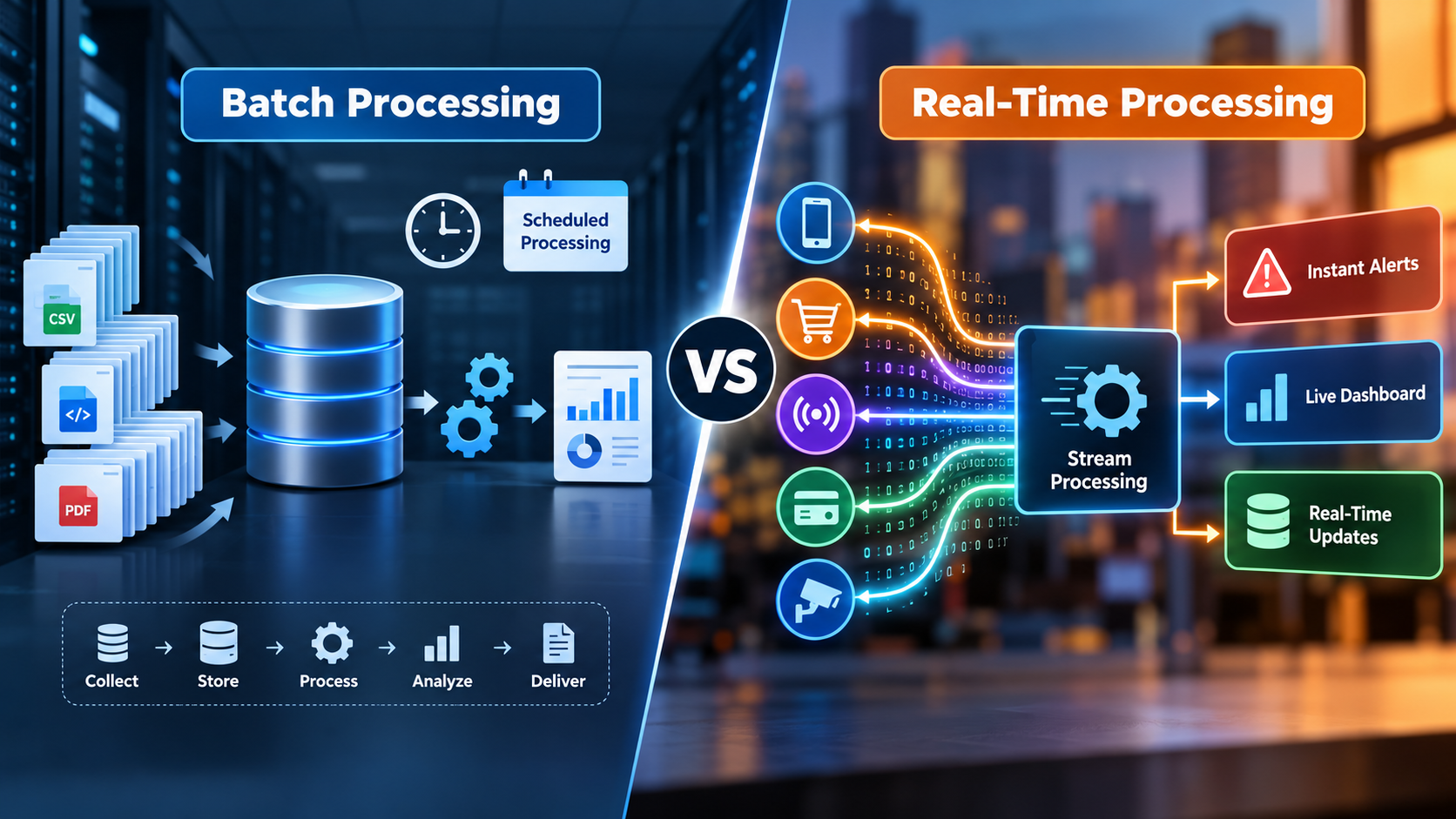
Neither pattern is real-time by default. Traditional integration runs in batches, and streaming platforms such as Apache Kafka can apply either ETL or ELT logic to data as it arrives. The better question is how fresh the data must be, and whether your transformation can keep up with that schedule.
Neither handles them automatically. Unexpected source changes, such as renamed columns, can cause ETL pipeline failures. ELT lands raw data first, so the load step often keeps working while downstream models may need updating. Either way, schema tests and alerts catch problems before analysts notice them, so build them early.
Both can be secure. The difference is when sensitive fields get handled. ETL can mask or encrypt data in transit, before it reaches the target. ELT loads raw data first, so teams need strong access controls, encryption, and governance inside the warehouse. Regulated industries may require masking before delivery, which often favors ETL for those fields.
Tools vary by stack. Many teams use managed data integration platforms with connectors, transformation features, and scheduling. Common features include broad connectors, no-code options, observability, and governance. Open-source frameworks also exist for custom pipelines. Choose based on your sources, team skills, and budget rather than brand reputation alone.
It depends on where costs land. ELT can have lower upfront costs, but unpredictable data volumes can create unexpected costs later. ETL often needs more upfront investment in infrastructure and pipeline design. ELT spends on warehouse compute and storage, so inefficient queries and repeated full rebuilds can raise bills quickly. Track usage from day one.
Data quality checks belong in both patterns. ETL checks data before it lands, which catches problems early but can slow loads. ELT loads first, so tests run after data reaches the warehouse, often inside the transformation layer. Cleansing, validating, and auditing are transformation tasks that both patterns must cover.
Conclusion
ETL and ELT differ in one step, but that step decides where your work happens and how your data behaves over time. ETL gives you control and clean inputs at the cost of more infrastructure. ELT gives you speed and flexibility at the cost of careful warehouse management.
For most cloud-native teams today, ELT is the natural default. Keep ETL in your toolkit for sensitive data, legacy systems, and heavy cleaning. Start with a clear view of your data, your compliance needs, and your budget, and the right ETL vs ELT choice usually becomes obvious.